1. Directions: In the following sentence, four words, marked as A, B, C, and D, are given in bold, out of which one word may or may not be misspelt. Identify the misspelt word and mark it as your answer. If all the highlighted words are correctly spelt, mark “All are correctly spelt” as your answer.
India’s reluctance (A) to give up coal clashes (B) with the push for trippling (C) renewable (D) energy globally.
A. A
B. B
C. C
D. D
E. All are correctly spelt
Solution
The correct answer is option 3.
Key Points
To answer this question, let’s look at all the marked words in the sentence:
- (A) Reluctance – unwillingness or hesitation to do something. (अनिच्छा)
- For Example –
- Despite his reluctance, he eventually agreed to join the team.
- (B) Clashes – conflicts or disagreements, often resulting in a physical or verbal confrontation. (टकराव)
- For Example –
- The clashes between the two rival groups led to a tense atmosphere in the neighbourhood.
- (C) Trippling – Here, “trippling” is misspelt, the correct spelling of the word is “tripling.”
- Tripling – multiplying something by three or increasing threefold. (तिगुना)
- For Example –
- The company’s profits showed a remarkable tripling over the last quarter.
- (D) Renewable – relating to a natural resource or energy source that is replenished naturally and can be used repeatedly. (नवीकरणीय)
- For Example –
- Solar power is a renewable energy source that harnesses energy from the sun and is environmentally friendly.
- Therefore, the correct answer is “C: trippling,” which should be corrected to “tripling.”
2. Directions: In the following sentence, four words, marked as A, B, C, and D, are given in bold, out of which one word may or may not be misspelt. Identify the misspelt word and mark it as your answer. If all the highlighted words are correctly spelt, mark “All are correctly spelt” as your answer.
Ambedkar’s principles (A) advocate for ethical (B) reforms in institutions to empower (C) marginelized (D) groups in society.
A. A
B. B
C. C
D. D
E. All are correctly spelt
Solution
The correct answer is option 4.
Key Points
To answer this question, let’s explore the marked words in the sentence:
- (A) Principles – fundamental beliefs or rules governing behaviour or thought. (सिद्धांत)
- For Example:
- Ambedkar’s principles laid the foundation for equality and social justice in modern India.
- (B) Ethical – relating to principles of right and wrong behaviour, adhering to moral values. (नैतिक)
- For Example:
- The company’s ethical practices earned it a reputation for integrity and honesty.
- (C) Empower – to give power or authority to someone, enabling them to take control of their lives or situations. (सशक्तिकरण)
- For Example:
- Education is a powerful tool to empower individuals and uplift communities.
- (D) Marginelized – Here, “marginelized” is misspelt. The correct spelling of the word is “marginalized.”
- Marginalized – to relegate or confine a group or individuals to a powerless or unimportant position within society.
- For Example:
- Efforts should be made to empower and include marginalized communities in decision-making processes.
- Therefore, the correct answer is “D: marginelized,” which should be corrected to “marginalized.”
3. Directions: In the following sentence, four words, marked as A, B, C, and D, are given in bold, out of which one word may or may not be misspelt. Identify the misspelt word and mark it as your answer. If all the highlighted words are correctly spelt, mark “All are correctly spelt” as your answer.
She was elated to recieve (A) commendation for her perspicacious (B) analysis, a testament (C) to her diligence and acumen (D).
A. A
B. B
C. C
D D
E. All are correctly spelt
Solution
The correct answer is option 1.
Key Points
To answer this question, let’s look at all the marked words in the sentence:
- (A) Recieve – Here, “recieve” is misspelt. The correct spelling of the word is “receive.”
- Receive – to accept or get something delivered. (प्राप्त करना)
- For Example –
- I will receive the package tomorrow.
- (B) Perspicacious – having a keen understanding or insight. (सूक्ष्मदर्शी)
- For Example –
- Her perspicacious analysis of the market trends impressed the investors.
- (C) Testament – evidence or proof of something. (प्रमाण)
- For Example –
- His success in the competition was a testament to his hard work.
- (D) Acumen – the ability to make good judgments and quick decisions. (कुशाग्र बुद्धि)
- For Example –
- Her business acumen helped her steer the company through tough times.
- Therefore, the correct answer is “A: recieve,” which should be corrected to “receive.”
4. Directions: In the following sentence, four words, marked as A, B, C, and D, are given in bold, out of which one word may or may not be misspelt. Identify the misspelt word and mark it as your answer. If all the highlighted words are correctly spelt, mark “All are correctly spelt” as your answer.
Having the priviledge (A) to access (B) education is a significant advantage that runs parallel (C) to opportunities for personal (D) growth.
A. A
B. B
C. C
D. D
E. All are correctly spelt
Solution
The correct answer is option 1.
Key Points
To answer this question, let’s review the highlighted words in the sentence:
- (A) Priviledge – Here, the word “priviledge” is misspelt. The correct spelling is “privilege.”
- Privilege – a special advantage or entitlement. (विशेषाधिकार)
- For Example –
- Having the privilege to travel broadened her perspective immensely.
- (B) Access – the ability or right to approach, enter, or make use of something. (पहुँच)
- For Example –
- Everyone should have access to quality healthcare.
- (C) Parallel – extending in the same direction, equidistant at all points, and never meeting. (समांतर)
- For Example –
- The two roads run parallel to each other for miles.
- (D) Personal – relating to an individual’s private life, relationships, or characteristics. (निजी)
- For Example –
- His personal experiences shaped his worldview.
- Therefore, the correct answer is “A: priviledge,” which should be corrected to “privilege.”
5. Directions: In the following sentence, four words, marked as A, B, C, and D, are given in bold, out of which one word may or may not be misspelt. Identify the misspelt word and mark it as your answer. If all the highlighted words are correctly spelt, mark “All are correctly spelt” as your answer.
The marathon (A) runner’s perserverance (B) drove him to train diligently (C), ultimately crossing the finish line with triumph (D).
A. A
B. B
C. C
D. D
E. All are correctly spelt
Solution
The correct answer is option 2.
Key Points
To address this question, let’s examine the highlighted words in the sentence:
- (A) Marathon – a long-distance running race.
- For Example –
- She trained rigorously for the upcoming marathon.
- (B) Perserverance – Here, “perserverance” is misspelt, the correct spelling of the word is “perseverance.”
- Perseverance – persistent determination despite difficulties or obstacles. (सहनशीलता)
- For Example –
- His perseverance in learning the language paid off when he could hold a conversation fluently.
- (C) Diligently – carefully and conscientiously, with a steady and earnest effort. (मेहनती ढंग से)
- For Example –
- She worked diligently on her thesis to ensure its completion before the deadline.
- (D) Triumph – a great victory or achievement that brings a sense of joy or satisfaction. (विजय)
- For Example –
- The team celebrated their triumph in the championship with jubilation.
- Therefore, the correct answer is “B: perserverance,” which should be corrected to “perseverance.”
6. Directions: Read the given passage carefully to answer the following questions. Each question will have five alternatives as its answer. Choose the correct option as your answer.
AI’s integration into education marks a transformative shift in learning paradigms. Its ability to personalize educational content revolutionizes traditional teaching methods. Adaptive learning platforms harness AI algorithms to cater to individual student needs, fostering a tailored approach to education. By offering immediate feedback through AI-driven assessment tools, educators gain invaluable insights to refine their teaching strategies effectively. Whether unravelling intricate grammatical structures or delving into foreign language nuances, AI accelerates the learning curve significantly, compressing what used to take months into a matter of days or even hours.
The realm of music experiences a fascinating intersection with AI, particularly in composition. Machine learning algorithms analyze extensive musical datasets, discerning intricate patterns and diverse styles to craft original compositions. Classical and contemporary music alike bears the mark of AI-generated pieces, prompting discussions on the authenticity and emotional depth of algorithmic creations. AI’s role in music creation, whether as an inspirational tool for human composers or a sole creator, solidifies its place in the musical landscape. Notably, the recent decision by the Grammy Awards to limit nominations exclusively to human creators signifies the ongoing debate surrounding AI’s contribution and the nuanced understanding of creativity in music.
AI’s impact transcends artistic expression, penetrating industries historically aligned with innovation and problem-solving. In scientific research, AI algorithms parse colossal datasets, unveiling patterns, predicting outcomes, and even formulating hypotheses. The unparalleled speed and efficiency of AI in processing information possess the potential to ________ scientific breakthroughs, ushering in new frontiers across disciplines like medicine, materials science, and environmental research. The convergence of AI with intricate coding and web development further exemplifies its diverse applications, revolutionizing complex tasks that were once solely human-driven endeavours.
The narrative surrounding AI often fixates on its perceived threat to human employment due to its expansive creative potential. However, this narrative overlooks the nuanced reality that heralds a symbiotic relationship between human creativity and AI innovation. Rather than a dichotomy of humans versus machines, this synergy underscores a collaborative partnership harnessing the unique strengths of both entities. It stands as a testament to the concept that the amalgamation of human ingenuity and AI advancements propels industries forward, unlocking unprecedented progress and opportunities. The future of work doesn’t rest on competition between humans and machines; rather, it thrives on the seamless integration of their complementary capabilities, promising a landscape where the whole transcends the sum of its parts.
Question:
Which of the following best describes the tone of the passage?
A. Pessimistic and sceptical about the integration of AI in education and artistic fields.
B. Enthusiastic and optimistic about the transformative impact of AI across various domains.
C. Anxious and uncertain about the ethical implications of AI in scientific research.
D. Indifferent and neutral towards the advancements made by AI in creative industries.
E. Cautious and pragmatic about the symbiotic relationship between human creativity and AI innovation.
Solution
The correct answer is option 2.
Key Points
- To answer this question, read the passage carefully and examine the overall tone of the passage:
- The passage enthusiastically discusses the transformative impact of AI across various domains, including education, artistic expression, scientific research, and industrial innovation. It highlights AI’s positive influence in revolutionizing traditional teaching methods, music composition, scientific breakthroughs, and integration into industries. It accentuates the potential and capabilities of AI while emphasizing a collaborative partnership between human creativity and AI innovation. Rather than adopting a pessimistic or indifferent stance, it optimistically portrays AI as a catalyst for progress and opportunities.
- So, upon careful consideration, the passage exudes an “enthusiastic and optimistic” tone regarding the transformative impact of AI across diverse fields. It showcases a positive outlook on the integration of AI, emphasizing its potential to drive innovation and progress.
- Therefore, the correct answer is “Enthusiastic and optimistic about the transformative impact of AI across various domains.”
7. Directions: Read the given passage carefully to answer the following questions. Each question will have five alternatives as its answer. Choose the correct option as your answer.
AI’s integration into education marks a transformative shift in learning paradigms. Its ability to personalize educational content revolutionizes traditional teaching methods. Adaptive learning platforms harness AI algorithms to cater to individual student needs, fostering a tailored approach to education. By offering immediate feedback through AI-driven assessment tools, educators gain invaluable insights to refine their teaching strategies effectively. Whether unravelling intricate grammatical structures or delving into foreign language nuances, AI accelerates the learning curve significantly, compressing what used to take months into a matter of days or even hours.
The realm of music experiences a fascinating intersection with AI, particularly in composition. Machine learning algorithms analyze extensive musical datasets, discerning intricate patterns and diverse styles to craft original compositions. Classical and contemporary music alike bears the mark of AI-generated pieces, prompting discussions on the authenticity and emotional depth of algorithmic creations. AI’s role in music creation, whether as an inspirational tool for human composers or a sole creator, solidifies its place in the musical landscape. Notably, the recent decision by the Grammy Awards to limit nominations exclusively to human creators signifies the ongoing debate surrounding AI’s contribution and the nuanced understanding of creativity in music.
AI’s impact transcends artistic expression, penetrating industries historically aligned with innovation and problem-solving. In scientific research, AI algorithms parse colossal datasets, unveiling patterns, predicting outcomes, and even formulating hypotheses. The unparalleled speed and efficiency of AI in processing information possess the potential to ________ scientific breakthroughs, ushering in new frontiers across disciplines like medicine, materials science, and environmental research. The convergence of AI with intricate coding and web development further exemplifies its diverse applications, revolutionizing complex tasks that were once solely human-driven endeavours.
The narrative surrounding AI often fixates on its perceived threat to human employment due to its expansive creative potential. However, this narrative overlooks the nuanced reality that heralds a symbiotic relationship between human creativity and AI innovation. Rather than a dichotomy of humans versus machines, this synergy underscores a collaborative partnership harnessing the unique strengths of both entities. It stands as a testament to the concept that the amalgamation of human ingenuity and AI advancements propels industries forward, unlocking unprecedented progress and opportunities. The future of work doesn’t rest on competition between humans and machines; rather, it thrives on the seamless integration of their complementary capabilities, promising a landscape where the whole transcends the sum of its parts.
Question:
Which of the following words will come in the blank taken from the passage?
The unparalleled speed and efficiency of AI in processing information possess the potential to ________ scientific breakthroughs, ushering in new frontiers across disciplines like medicine, materials science, and environmental research.
A. expedite
B. hinder
C. illuminate
D. diminish
E. decelerate
Solution
The correct answer is option 1.
Key Points
To answer this question, let’s first examine the sentence with the blank from the passage:
“The unparalleled speed and efficiency of AI in processing information possess the potential to ________ scientific breakthroughs, ushering in new frontiers across disciplines like medicine, materials science, and environmental research.”
- The sentence suggests that AI’s exceptional speed and efficiency in processing information hold the capability to impact scientific breakthroughs positively.
- The word to fill the blank should convey a sense of advancing or accelerating progress in scientific discoveries.
- Now, let’s explore the meanings of the provided options:
- Expedite – to speed up or make something happen faster (तेज़ करना)
- For example:
- Using express shipping will expedite the delivery of the package.
- Hinder – to create difficulties or obstacles that slow down or prevent progress (रोकना)
- For example:
- Bad weather can hinder the construction progress on the roads.
- Illuminate – to provide clarity, understanding, or shed light on something (प्रकाश डालना)
- For example:
- The professor’s explanations helped to illuminate the complex theory for the students.
- Diminish – to make something smaller, reduce its importance, or decrease in size or intensity (कम करना)
- For example:
- The lack of resources might diminish the chances of success in the project.
- Decelerate – to slow down or reduce the speed of something (धीमा करना)
- For example:
- The driver had to decelerate the car as they approached the intersection.
- So, considering the context of the sentence, the word that aligns best with the potential impact of AI’s speed and efficiency on scientific breakthroughs is “expedite.” It fits the idea that AI’s rapid processing capabilities could accelerate the pace of discoveries and advancements in various scientific domains, as mentioned in the passage.
- Therefore, the correct answer is “Expedite.”
8. Directions: Read the given passage carefully to answer the following questions. Each question will have five alternatives as its answer. Choose the correct option as your answer.
AI’s integration into education marks a transformative shift in learning paradigms. Its ability to personalize educational content revolutionizes traditional teaching methods. Adaptive learning platforms harness AI algorithms to cater to individual student needs, fostering a tailored approach to education. By offering immediate feedback through AI-driven assessment tools, educators gain invaluable insights to refine their teaching strategies effectively. Whether unravelling intricate grammatical structures or delving into foreign language nuances, AI accelerates the learning curve significantly, compressing what used to take months into a matter of days or even hours.
The realm of music experiences a fascinating intersection with AI, particularly in composition. Machine learning algorithms analyze extensive musical datasets, discerning intricate patterns and diverse styles to craft original compositions. Classical and contemporary music alike bears the mark of AI-generated pieces, prompting discussions on the authenticity and emotional depth of algorithmic creations. AI’s role in music creation, whether as an inspirational tool for human composers or a sole creator, solidifies its place in the musical landscape. Notably, the recent decision by the Grammy Awards to limit nominations exclusively to human creators signifies the ongoing debate surrounding AI’s contribution and the nuanced understanding of creativity in music.
AI’s impact transcends artistic expression, penetrating industries historically aligned with innovation and problem-solving. In scientific research, AI algorithms parse colossal datasets, unveiling patterns, predicting outcomes, and even formulating hypotheses. The unparalleled speed and efficiency of AI in processing information possess the potential to ________ scientific breakthroughs, ushering in new frontiers across disciplines like medicine, materials science, and environmental research. The convergence of AI with intricate coding and web development further exemplifies its diverse applications, revolutionizing complex tasks that were once solely human-driven endeavours.
The narrative surrounding AI often fixates on its perceived threat to human employment due to its expansive creative potential. However, this narrative overlooks the nuanced reality that heralds a symbiotic relationship between human creativity and AI innovation. Rather than a dichotomy of humans versus machines, this synergy underscores a collaborative partnership harnessing the unique strengths of both entities. It stands as a testament to the concept that the amalgamation of human ingenuity and AI advancements propels industries forward, unlocking unprecedented progress and opportunities. The future of work doesn’t rest on competition between humans and machines; rather, it thrives on the seamless integration of their complementary capabilities, promising a landscape where the whole transcends the sum of its parts.
Question:
What is the Grammy Awards’ recent decision regarding AI’s role in music creation?
A. The Grammy Awards have completely banned AI-generated music.
B. The Grammy Awards allow AI to solely determine nominations.
C. The Grammy Awards don’t consider AI’s role in music composition.
D. The Grammy Awards have embraced AI as the sole creator of music.
E. The Grammy Awards restrict nominations to human creators only.
Solution
The correct answer is option 5.
Key Points
- To answer this question, refer to the information in the second paragraph of the passage regarding the Grammy Awards’ stance on AI’s role in music creation:
- “Notably, the recent decision by the Grammy Awards to limit nominations exclusively to human creators signifies the ongoing debate surrounding AI’s contribution and the nuanced understanding of creativity in music.”
- From this part of the passage, it’s clear that the Grammy Awards made a recent decision to limit nominations exclusively to human creators. This decision signifies the ongoing debate surrounding AI’s contribution and the nuanced understanding of creativity in music.
- Therefore, the correct answer is “The Grammy Awards restrict nominations to human creators only.”
9. Directions: Read the given passage carefully to answer the following questions. Each question will have five alternatives as its answer. Choose the correct option as your answer.
AI’s integration into education marks a transformative shift in learning paradigms. Its ability to personalize educational content revolutionizes traditional teaching methods. Adaptive learning platforms harness AI algorithms to cater to individual student needs, fostering a tailored approach to education. By offering immediate feedback through AI-driven assessment tools, educators gain invaluable insights to refine their teaching strategies effectively. Whether unravelling intricate grammatical structures or delving into foreign language nuances, AI accelerates the learning curve significantly, compressing what used to take months into a matter of days or even hours.
The realm of music experiences a fascinating intersection with AI, particularly in composition. Machine learning algorithms analyze extensive musical datasets, discerning intricate patterns and diverse styles to craft original compositions. Classical and contemporary music alike bears the mark of AI-generated pieces, prompting discussions on the authenticity and emotional depth of algorithmic creations. AI’s role in music creation, whether as an inspirational tool for human composers or a sole creator, solidifies its place in the musical landscape. Notably, the recent decision by the Grammy Awards to limit nominations exclusively to human creators signifies the ongoing debate surrounding AI’s contribution and the nuanced understanding of creativity in music.
AI’s impact transcends artistic expression, penetrating industries historically aligned with innovation and problem-solving. In scientific research, AI algorithms parse colossal datasets, unveiling patterns, predicting outcomes, and even formulating hypotheses. The unparalleled speed and efficiency of AI in processing information possess the potential to ________ scientific breakthroughs, ushering in new frontiers across disciplines like medicine, materials science, and environmental research. The convergence of AI with intricate coding and web development further exemplifies its diverse applications, revolutionizing complex tasks that were once solely human-driven endeavours.
The narrative surrounding AI often fixates on its perceived threat to human employment due to its expansive creative potential. However, this narrative overlooks the nuanced reality that heralds a symbiotic relationship between human creativity and AI innovation. Rather than a dichotomy of humans versus machines, this synergy underscores a collaborative partnership harnessing the unique strengths of both entities. It stands as a testament to the concept that the amalgamation of human ingenuity and AI advancements propels industries forward, unlocking unprecedented progress and opportunities. The future of work doesn’t rest on competition between humans and machines; rather, it thrives on the seamless integration of their complementary capabilities, promising a landscape where the whole transcends the sum of its parts.
Question:
How does AI impact educational approaches according to the passage?
A. By enforcing standardized teaching methods across diverse learners.
B. By creating a one-size-fits-all learning structure.
C. By providing immediate feedback and customized learning experiences.
D. By eliminating the need for educators in the learning process.
E. By restricting access to educational content based on AI algorithms.
Solution
The correct answer is option 3.
Key Points
- To answer this question, refer to the first paragraph of the passage discussing AI’s impact on educational approaches:
- “Adaptive learning platforms harness AI algorithms to cater to individual student needs, fostering a tailored approach to education. By offering immediate feedback through AI-driven assessment tools, educators gain invaluable insights to refine their teaching strategies effectively.”
- From this part of the passage, it’s evident that AI impacts educational approaches by providing personalized and tailored learning experiences for individual students. The use of AI algorithms in adaptive learning platforms caters to specific student needs, and AI-driven assessment tools offer immediate feedback. This personalized approach allows educators to refine their teaching strategies effectively based on the insights gained from AI.
- Therefore, the correct answer is “By providing immediate feedback and customized learning experiences.”
10. Directions: Read the given passage carefully to answer the following questions. Each question will have five alternatives as its answer. Choose the correct option as your answer.
AI’s integration into education marks a transformative shift in learning paradigms. Its ability to personalize educational content revolutionizes traditional teaching methods. Adaptive learning platforms harness AI algorithms to cater to individual student needs, fostering a tailored approach to education. By offering immediate feedback through AI-driven assessment tools, educators gain invaluable insights to refine their teaching strategies effectively. Whether unravelling intricate grammatical structures or delving into foreign language nuances, AI accelerates the learning curve significantly, compressing what used to take months into a matter of days or even hours.
The realm of music experiences a fascinating intersection with AI, particularly in composition. Machine learning algorithms analyze extensive musical datasets, discerning intricate patterns and diverse styles to craft original compositions. Classical and contemporary music alike bears the mark of AI-generated pieces, prompting discussions on the authenticity and emotional depth of algorithmic creations. AI’s role in music creation, whether as an inspirational tool for human composers or a sole creator, solidifies its place in the musical landscape. Notably, the recent decision by the Grammy Awards to limit nominations exclusively to human creators signifies the ongoing debate surrounding AI’s contribution and the nuanced understanding of creativity in music.
AI’s impact transcends artistic expression, penetrating industries historically aligned with innovation and problem-solving. In scientific research, AI algorithms parse colossal datasets, unveiling patterns, predicting outcomes, and even formulating hypotheses. The unparalleled speed and efficiency of AI in processing information possess the potential to ________ scientific breakthroughs, ushering in new frontiers across disciplines like medicine, materials science, and environmental research. The convergence of AI with intricate coding and web development further exemplifies its diverse applications, revolutionizing complex tasks that were once solely human-driven endeavours.
The narrative surrounding AI often fixates on its perceived threat to human employment due to its expansive creative potential. However, this narrative overlooks the nuanced reality that heralds a symbiotic relationship between human creativity and AI innovation. Rather than a dichotomy of humans versus machines, this synergy underscores a collaborative partnership harnessing the unique strengths of both entities. It stands as a testament to the concept that the amalgamation of human ingenuity and AI advancements propels industries forward, unlocking unprecedented progress and opportunities. The future of work doesn’t rest on competition between humans and machines; rather, it thrives on the seamless integration of their complementary capabilities, promising a landscape where the whole transcends the sum of its parts.
Question:
What best represents the narrative shift the passage suggests regarding AI’s role in industries?
A. A focus on the rivalry between humans and machines in the workforce.
B. An emphasis on AI as the sole driver of progress in innovation.
C. A belief in the inevitable replacement of human creativity by AI.
D. A collaboration between human ingenuity and AI advancements.
E. A prediction of AI’s failure in revolutionizing complex tasks.
Solution
The correct answer is option 4.
Key Points
- To answer this question, refer to the last paragraph of the passage discussing the narrative surrounding AI’s role in industries:
- “The narrative surrounding AI often fixates on its perceived threat to human employment due to its expansive creative potential. However, this narrative overlooks the nuanced reality that heralds a symbiotic relationship between human creativity and AI innovation. Rather than a dichotomy of humans versus machines, this synergy underscores a collaborative partnership harnessing the unique strengths of both entities.”
- From this part of the passage, it’s evident that the narrative shift suggested regarding AI’s role in industries is a collaborative partnership between human creativity and AI innovation. The passage emphasizes the nuanced reality of a symbiotic relationship between human creativity and AI, highlighting a collaborative partnership that harnesses the unique strengths of both entities.
- Therefore, the correct answer is “A collaboration between human ingenuity and AI advancements.”
11. Directions: Read the given passage carefully to answer the following questions. Each question will have five alternatives as its answer. Choose the correct option as your answer.
AI’s integration into education marks a transformative shift in learning paradigms. Its ability to personalize educational content revolutionizes traditional teaching methods. Adaptive learning platforms harness AI algorithms to cater to individual student needs, fostering a tailored approach to education. By offering immediate feedback through AI-driven assessment tools, educators gain invaluable insights to refine their teaching strategies effectively. Whether unravelling intricate grammatical structures or delving into foreign language nuances, AI accelerates the learning curve significantly, compressing what used to take months into a matter of days or even hours.
The realm of music experiences a fascinating intersection with AI, particularly in composition. Machine learning algorithms analyze extensive musical datasets, discerning intricate patterns and diverse styles to craft original compositions. Classical and contemporary music alike bears the mark of AI-generated pieces, prompting discussions on the authenticity and emotional depth of algorithmic creations. AI’s role in music creation, whether as an inspirational tool for human composers or a sole creator, solidifies its place in the musical landscape. Notably, the recent decision by the Grammy Awards to limit nominations exclusively to human creators signifies the ongoing debate surrounding AI’s contribution and the nuanced understanding of creativity in music.
AI’s impact transcends artistic expression, penetrating industries historically aligned with innovation and problem-solving. In scientific research, AI algorithms parse colossal datasets, unveiling patterns, predicting outcomes, and even formulating hypotheses. The unparalleled speed and efficiency of AI in processing information possess the potential to ________ scientific breakthroughs, ushering in new frontiers across disciplines like medicine, materials science, and environmental research. The convergence of AI with intricate coding and web development further exemplifies its diverse applications, revolutionizing complex tasks that were once solely human-driven endeavours.
The narrative surrounding AI often fixates on its perceived threat to human employment due to its expansive creative potential. However, this narrative overlooks the nuanced reality that heralds a symbiotic relationship between human creativity and AI innovation. Rather than a dichotomy of humans versus machines, this synergy underscores a collaborative partnership harnessing the unique strengths of both entities. It stands as a testament to the concept that the amalgamation of human ingenuity and AI advancements propels industries forward, unlocking unprecedented progress and opportunities. The future of work doesn’t rest on competition between humans and machines; rather, it thrives on the seamless integration of their complementary capabilities, promising a landscape where the whole transcends the sum of its parts.
Which of the following words is opposite in meaning to “amalgamation” in the context of the passage?
A. Fusion
B. Harmony
C. Integration
D. Segregation
E. Comprehension
Solution
The correct answer is option 4.
Key Points
- To answer this question, let’s first understand the meaning of the highlighted word “amalgamation” in the context of the passage:
- Amalgamation – the merging or combining of different elements into a unified whole (संकलन)
- For Example –
- The festival was an amalgamation of diverse cultural traditions.
- Now, let’s consider the options:
- Fusion – similar to amalgamation, meaning the merging or blending of elements (मिलाप)
- For Example –
- The fusion of different cuisines created a unique dining experience.
- Harmony – unrelated to the process of combining different elements; refers to agreement or compatibility (सामंजस्य)
- For Example –
- The music concert showcased a beautiful harmony among the instruments.
- Integration – similar to amalgamation, indicating the combining or unification of parts (एकीकरण)
- For Example –
- The integration of new technologies streamlined the workflow.
- Segregation – opposite of amalgamation, meaning the separation or division of elements (विभाजन)
- For Example –
- Segregation based on race was a prevalent issue in history.
- Comprehension – unrelated to the act of merging or combining; refers to understanding or grasping of something (समझ)
- For Example –
- The students showed excellent comprehension of the complex topic.
- So, after understanding the meaning of “amalgamation” and analyzing the options, we can conclude that the word opposite in meaning to “amalgamation” in the context of the passage is “Segregation.” Amalgamation signifies the merging or unification of elements, while segregation denotes the separation or division.
- Therefore, the correct answer is “Segregation.”
12. Directions: Read the given passage carefully to answer the following questions. Each question will have five alternatives as its answer. Choose the correct option as your answer.
AI’s integration into education marks a transformative shift in learning paradigms. Its ability to personalize educational content revolutionizes traditional teaching methods. Adaptive learning platforms harness AI algorithms to cater to individual student needs, fostering a tailored approach to education. By offering immediate feedback through AI-driven assessment tools, educators gain invaluable insights to refine their teaching strategies effectively. Whether unravelling intricate grammatical structures or delving into foreign language nuances, AI accelerates the learning curve significantly, compressing what used to take months into a matter of days or even hours.
The realm of music experiences a fascinating intersection with AI, particularly in composition. Machine learning algorithms analyze extensive musical datasets, discerning intricate patterns and diverse styles to craft original compositions. Classical and contemporary music alike bears the mark of AI-generated pieces, prompting discussions on the authenticity and emotional depth of algorithmic creations. AI’s role in music creation, whether as an inspirational tool for human composers or a sole creator, solidifies its place in the musical landscape. Notably, the recent decision by the Grammy Awards to limit nominations exclusively to human creators signifies the ongoing debate surrounding AI’s contribution and the nuanced understanding of creativity in music.
AI’s impact transcends artistic expression, penetrating industries historically aligned with innovation and problem-solving. In scientific research, AI algorithms parse colossal datasets, unveiling patterns, predicting outcomes, and even formulating hypotheses. The unparalleled speed and efficiency of AI in processing information possess the potential to ________ scientific breakthroughs, ushering in new frontiers across disciplines like medicine, materials science, and environmental research. The convergence of AI with intricate coding and web development further exemplifies its diverse applications, revolutionizing complex tasks that were once solely human-driven endeavours.
The narrative surrounding AI often fixates on its perceived threat to human employment due to its expansive creative potential. However, this narrative overlooks the nuanced reality that heralds a symbiotic relationship between human creativity and AI innovation. Rather than a dichotomy of humans versus machines, this synergy underscores a collaborative partnership harnessing the unique strengths of both entities. It stands as a testament to the concept that the amalgamation of human ingenuity and AI advancements propels industries forward, unlocking unprecedented progress and opportunities. The future of work doesn’t rest on competition between humans and machines; rather, it thrives on the seamless integration of their complementary capabilities, promising a landscape where the whole transcends the sum of its parts.
Question:
Which of the following words is similar in meaning to “harness” in the context of the passage?
A. Disregard
B. Enhance
C. Leverage
D. Constraint
E. Discourage
Solution
The correct answer is option 3.
Key Points
- To answer this question, let’s first understand the meaning of the highlighted word “harness” in the context of the passage:
- Harness – to utilize or make use of something effectively (उपयोग करना)
- For Example:
- The team aimed to harness solar energy to power the remote village efficiently.
- Now, let’s consider the options:
- Disregard – to ignore or pay no attention to something (उपेक्षा करना)
- For Example:
- He chose to disregard the warnings and ventured into the restricted area.
- Enhance – to improve or make something better (बेहतर बनाना)
- For Example:
- Regular exercise can enhance overall fitness and well-being.
- Leverage – to use something to maximum advantage (सार्थकता से उपयोग करना)
- For Example:
- The company sought to leverage its technological expertise to expand globally.
- Constraint – a limitation or restriction (प्रतिबंध)
- For Example:
- Budget constraints hindered the project’s development.
- Discourage – to demotivate or prevent someone from doing something (निराश करना)
- For Example:
- Constructive feedback should encourage, not discourage, creative thinking.
- So, after understanding the meaning of the highlighted word “harness” and considering all the words given as options, we can conclude that the word “leverage” is the most similar in meaning to the word “harness” in the context of the passage as both words denote the effective utilization or use of something for maximum advantage.
- Therefore, the correct answer is “Leverage.”
13. Directions: Select the phrase from the options below that should replace the underlined phrase in the sentence to make it grammatically correct. If the sentence is already correct, select ‘No correction required’ as your answer.The film was so more exciting than I thought it would be.
A. Far more exciting
B. Much more exciting
C. So much more exciting
D. Very more exciting
E. No correction required
Solution
The correct answer is ‘Option 2’.
Key Points
- The error in the sentence is the use of “so” before “more.” The correct comparative formation is “much more.”
- The word “much” is used to modify comparatives, i.e., to show that one thing has a greater degree or extent of a quality than another.
- So, the correct construction would be, “The film was much more exciting than I thought it would be.“
- Thus, ‘Much more exciting‘ rectifies the error and maintains the intended sense of the sentence.
Therefore, the correct answer is ‘Much more exciting’.
Additional Information
- ‘Far more exciting‘: Though not incorrect, this phrase intensifies the comparison more than might be intended in the original sentence.
- ‘So much more exciting‘: This phrase is heavy-handed and is not the exact equivalent of the original sentence’s meaning.
- ‘Very more exciting‘: This phrase is incorrect because “very” cannot be used in this context.
- ‘No correction required‘: This is not suitable because the original sentence is grammatically incorrect.
14. Directions: Select the phrase from the options below that should replace the underlined phrase in the sentence to make it grammatically correct. If the sentence is already correct, select ‘No correction required’ as your answer.John mentioned that he loves to playing tennis at the club.
A. Loves playing
B. Loves to play
C. Loved to play
D. Loved playing
E. No correction required
Solution
The correct answer is ‘Option 2’.
Key Points
- The error in the sentence lies in the use of the gerund form “playing” after “to.”
- The infinitive ‘to‘ should be followed by the base form of the verb, in this case, ‘play‘.
- So, the phrase would be “John mentioned that he loves to play tennis at the club.“
- Here, ‘Loves to play‘ rectifies the error in question and maintains the intended meaning of the sentence.
Therefore, the correct answer is ‘Loves to play’.
Additional Information
- ‘Loves playing‘: This is grammatically correct but changes the original sentence’s language slightly. In some dialects, this may even imply a slight difference in how often he plays.
- ‘Loved to play‘: This changes the sentence’s tense. The original sentence is in the present tense, while this is in the past.
- ‘Loved playing‘: This too changes the sentence’s tense from present to past.
- ‘No correction required‘: This is not applicable as the original sentence contains a mistake.
15. Directions: Select the phrase from the options below that should replace the underlined phrase in the sentence to make it grammatically correct. If the sentence is already correct, select ‘No correction required’ as your answer.Elizabeth loves dogs; she loves cats also.
A. But she loves cats too
B. She too loves cats
C. She also loves cats
D. Also, she loves cats
E. No correction required
Solution
The correct answer is ‘Option 3’.
Key Points
- In the given sentence, the usage of ‘also‘ at the end of the phrase is not incorrect, but it is more common and grammatically preferred to position ‘also‘ in front of the verb it modifies.
- The correct phrase “She also loves cats” has a minor reordering that makes the sentence sound more natural.
- So, the proper way to express this would be, “Elizabeth loves dogs; she also loves cats.“
Therefore, the correct answer is ‘She also loves cats’.
Additional Information
- ‘But she loves cats too‘: This phrase adds a contrast not present in the original sentence and is therefore not a suitable replacement.
- ‘She too loves cats‘: While grammatically correct, this alternative is somewhat less common and less informal than ‘She also loves cats’.
- ‘Also, she loves cats‘: This option, although technically acceptable, moves the word ‘also’ to a position that changes the sentence’s rhythm and natural feel significantly.
- ‘No correction required‘: This is not applicable since the placement of “also” is unconventional, even if it’s not technically incorrect.
16. Directions: In the following passage, some words have been deleted. Select the most appropriate option to fill in each blank.
Here’s an oversimplification of the essence of Plato’s thought: Meaning is ___(1)___not from things as they are, but rather the idea of them. Take the word “chair”. Plato thought that the ___(2)___ kinds of chairs fall into the category “chair” because there is an ideal world in which there is an ideal idea of a chair. Ironically, then, it now ___(3)___that the mundane empirical world — of science, research, computers and archaeology — is set to change much of what we know about the life and work of arguably the world’s best-known idealist. It’s a bit like the plot of an Indiana Jones film, or another installment of the Da Vinci Code. From the volcanic ash around Mount Vesuvius, there ___(4)___a scroll, frayed and tattered with writing not spoken or seen for thousands of years. With the help of linguists, philologists, archaeologists and even AI and machine learning models, the papyrus scroll’s inscrutable secrets have been ___(5)___. Earlier this week, information about where the philosopher was likely laid to rest was shared and the text even reveals that when ailing, before he died at 81, he found the energy to criticise the form of a musician. Those who know Plato would undoubtedly say, “how typical”.
Question:
Which of the following is the most appropriate option to fill in the blank labelled as (1)?
A. extracted
B. gleaned
C. derived
D. presupposed
E. ignored
Solution
The correct answer is: Option 3.
Key Points
- “Derived” refers to obtaining something from a specified source; it means to take, receive, or obtain, especially from a specified source. (व्युत्पन्न)
- Example: The word ‘cryptography‘ is derived from the Greek words ‘kryptos‘, meaning hidden, and ‘graphein‘, meaning to write.
- This is because the sentence discusses how meaning comes “not from things as they are, but rather the idea of them”.
- Hence, we can infer that the most appropriate option to fill in the blank labelled as (1) is ‘derived’.
Therefore, the correct answer is: Derived.
Complete Paragraph: Here’s an oversimplification of the essence of Plato’s thought: Meaning is Derived not from things as they are, but rather the idea of them. Take the word “chair”. Plato thought that the ___(2)___ kinds of chairs fall into the category “chair” because there is an ideal world in which there is an ideal idea of a chair. Ironically, then, it now ___(3)___that the mundane empirical world — of science, research, computers and archaeology — is set to change much of what we know about the life and work of arguably the world’s best-known idealist. It’s a bit like the plot of an Indiana Jones film, or another installment of the Da Vinci Code. From the volcanic ash around Mount Vesuvius, there ___(4)___a scroll, frayed and tattered with writing not spoken or seen for thousands of years. With the help of linguists, philologists, archaeologists and even AI and machine learning models, the papyrus scroll’s inscrutable secrets have been ___(5)___. Earlier this week, information about where the philosopher was likely laid to rest was shared and the text even reveals that when ailing, before he died at 81, he found the energy to criticise the form of a musician. Those who know Plato would undoubtedly say, “how typical”
Additional Information
Here are the other options explained along with their Hindi meanings and example sentences:
- Extracted (निकाला गया): To remove or take out, especially by effort or force.
- Example: The dentist extracted the damaged tooth with precision.
- Gleaned (संकलित): To gather information or material bit by bit.
- Example: She gleaned her data from various studies across the globe.
- Presupposed (पूर्वानुमान): To tacitly assume at the beginning of a line of argument or course of action that something is the case.
- Example: His theory presupposed that social norms are created by individuals.
- Ignored (अनदेखा किया): Refusing to take notice of or acknowledge; disregard intentionally.
- Example: He ignored the messages popping up on his phone to focus on his work.
17. Directions: In the following passage, some words have been deleted. Select the most appropriate option to fill in each blank.
Here’s an oversimplification of the essence of Plato’s thought: Meaning is ___(1)___not from things as they are, but rather the idea of them. Take the word “chair”. Plato thought that the ___(2)___ kinds of chairs fall into the category “chair” because there is an ideal world in which there is an ideal idea of a chair. Ironically, then, it now ___(3)___that the mundane empirical world — of science, research, computers and archaeology — is set to change much of what we know about the life and work of arguably the world’s best-known idealist. It’s a bit like the plot of an Indiana Jones film, or another installment of the Da Vinci Code. From the volcanic ash around Mount Vesuvius, there ___(4)___a scroll, frayed and tattered with writing not spoken or seen for thousands of years. With the help of linguists, philologists, archaeologists and even AI and machine learning models, the papyrus scroll’s inscrutable secrets have been ___(5)___. Earlier this week, information about where the philosopher was likely laid to rest was shared and the text even reveals that when ailing, before he died at 81, he found the energy to criticise the form of a musician. Those who know Plato would undoubtedly say, “how typical”.
Question:
Which of the following is the most appropriate option to fill in the blank labelled as (2)?
A. myriad
B. various
C. all
D. specific
E. tangible
Solution
The correct answer is: Option 2.
Key Points
- “Various” refers to several different kinds of something or many different types. (विभिन्न)
- Example: The exhibition showcases various types of modern art from around the world.
- “Various” is the best choice because it succinctly expresses the concept of diversity within the category of “chair” that Plato’s theory of forms addresses.
- Therefore, “various” is the correct word to indicate a range of different types or kinds, which is fitting for the context provided.
Therefore, the correct answer is: Various.
Complete Paragraph: Here’s an oversimplification of the essence of Plato’s thought: Meaning is Derived not from things as they are, but rather the idea of them. Take the word “chair”. Plato thought that the Various kinds of chairs fall into the category “chair” because there is an ideal world in which there is an ideal idea of a chair. Ironically, then, it now ___(3)___that the mundane empirical world — of science, research, computers and archaeology — is set to change much of what we know about the life and work of arguably the world’s best-known idealist. It’s a bit like the plot of an Indiana Jones film, or another installment of the Da Vinci Code. From the volcanic ash around Mount Vesuvius, there ___(4)___a scroll, frayed and tattered with writing not spoken or seen for thousands of years. With the help of linguists, philologists, archaeologists and even AI and machine learning models, the papyrus scroll’s inscrutable secrets have been ___(5)___. Earlier this week, information about where the philosopher was likely laid to rest was shared and the text even reveals that when ailing, before he died at 81, he found the energy to criticise the form of a musician. Those who know Plato would undoubtedly say, “how typical”
Additional Information
Here are the other options explained along with their Hindi meanings and example sentences:
- Myriad (असंख्य): A countless or extremely great number of people or things.
- Example: She faced a myriad of challenges on her way to becoming a successful entrepreneur.
- All (सभी): Referring to the whole number or entire sum of something.
- Example: All of her friends were invited to the party.
- Specific (विशेष): Clearly defined or identified.
- Example: She gave very specific instructions on how to care for her pets while she was away.
- Tangible (स्पर्शीय): Capable of being touched or felt; having physical presence.
- Example: The company needs to show tangible benefits to secure further investment.
18. Directions: In the following passage, some words have been deleted. Select the most appropriate option to fill in each blank.
Here’s an oversimplification of the essence of Plato’s thought: Meaning is ___(1)___not from things as they are, but rather the idea of them. Take the word “chair”. Plato thought that the ___(2)___ kinds of chairs fall into the category “chair” because there is an ideal world in which there is an ideal idea of a chair. Ironically, then, it now ___(3)___that the mundane empirical world — of science, research, computers and archaeology — is set to change much of what we know about the life and work of arguably the world’s best-known idealist. It’s a bit like the plot of an Indiana Jones film, or another installment of the Da Vinci Code. From the volcanic ash around Mount Vesuvius, there ___(4)___a scroll, frayed and tattered with writing not spoken or seen for thousands of years. With the help of linguists, philologists, archaeologists and even AI and machine learning models, the papyrus scroll’s inscrutable secrets have been ___(5)___. Earlier this week, information about where the philosopher was likely laid to rest was shared and the text even reveals that when ailing, before he died at 81, he found the energy to criticise the form of a musician. Those who know Plato would undoubtedly say, “how typical”.
Question:
Which of the following is the most appropriate option to fill in the blank labelled as (3)?
A. seems
B. remains
C. becomes
D. proves
E. appears
Solution
The correct answer is: Option 3.
Key Points
- “Becomes” refers to the process of change or growth to reach a particular state or condition; it indicates transformation. (बन जाता है)
- Example: He becomes more confident with each passing day.
- Hence, in the context of filling in the blank, “becomes” is the word that best indicates a transformation or change to a particular state, making it the correct choice.
Therefore, the correct answer is: becomes.
Complete Paragraph: Here’s an oversimplification of the essence of Plato’s thought: Meaning is Derived not from things as they are, but rather the idea of them. Take the word “chair”. Plato thought that the Various kinds of chairs fall into the category “chair” because there is an ideal world in which there is an ideal idea of a chair. Ironically, then, it now becomes that the mundane empirical world — of science, research, computers and archaeology — is set to change much of what we know about the life and work of arguably the world’s best-known idealist. It’s a bit like the plot of an Indiana Jones film, or another installment of the Da Vinci Code. From the volcanic ash around Mount Vesuvius, there ___(4)___a scroll, frayed and tattered with writing not spoken or seen for thousands of years. With the help of linguists, philologists, archaeologists and even AI and machine learning models, the papyrus scroll’s inscrutable secrets have been ___(5)___. Earlier this week, information about where the philosopher was likely laid to rest was shared and the text even reveals that when ailing, before he died at 81, he found the energy to criticise the form of a musician. Those who know Plato would undoubtedly say, “how typical”
Additional Information
Here are the other options explained along with their Hindi meanings and example sentences:
- Seems (लगता है): The appearance of something or gives the impression of being or doing something, often without stating it directly; it suggests a perception or assumption.
- Example: She seems happy, but looks can be deceiving.
- Remains (बने रहते हैं): To continue to be in the same state or condition.
- Example: Despite the challenges, she remains optimistic.
- Proves (साबित होता है): To demonstrate the truth or existence of (something) by evidence or argument.
- Example: The theory still needs to be proved with more research.
- Appears (प्रकट होता है): To come into sight; become visible or noticeable, typically without visible agent or apparent cause.
- Example: A smile appeared on her face.
19. Directions: In the following passage, some words have been deleted. Select the most appropriate option to fill in each blank.
Here’s an oversimplification of the essence of Plato’s thought: Meaning is ___(1)___not from things as they are, but rather the idea of them. Take the word “chair”. Plato thought that the ___(2)___ kinds of chairs fall into the category “chair” because there is an ideal world in which there is an ideal idea of a chair. Ironically, then, it now ___(3)___that the mundane empirical world — of science, research, computers and archaeology — is set to change much of what we know about the life and work of arguably the world’s best-known idealist. It’s a bit like the plot of an Indiana Jones film, or another installment of the Da Vinci Code. From the volcanic ash around Mount Vesuvius, there ___(4)___a scroll, frayed and tattered with writing not spoken or seen for thousands of years. With the help of linguists, philologists, archaeologists and even AI and machine learning models, the papyrus scroll’s inscrutable secrets have been ___(5)___. Earlier this week, information about where the philosopher was likely laid to rest was shared and the text even reveals that when ailing, before he died at 81, he found the energy to criticise the form of a musician. Those who know Plato would undoubtedly say, “how typical”.
Question:
Which of the following is the most appropriate option to fill in the blank labelled as (4)?
A. emerged
B. vanished
C. dissolved
D. appeared
E. surfaced
Solution
The correct answer is: Option 4.
Key Points
- The word “emerged” means to move out of or away from something and come into view; it often refers to coming into existence or attention in a gradual way. (प्रकट होना)
- Example: After months of research, a promising solution finally emerged.
- “emerged” illustrates the process of becoming visible after being concealed or the action of coming forth into view or notice.
- Example: The butterfly emerged from its cocoon, spreading its wings for the first time.
- Therefore, the correct answer is: emerged.
Therefore, the correct answer is: emerged.
Complete Paragraph: Here’s an oversimplification of the essence of Plato’s thought: Meaning is Derived not from things as they are, but rather the idea of them. Take the word “chair”. Plato thought that the Various kinds of chairs fall into the category “chair” because there is an ideal world in which there is an ideal idea of a chair. Ironically, then, it now becomes that the mundane empirical world — of science, research, computers and archaeology — is set to change much of what we know about the life and work of arguably the world’s best-known idealist. It’s a bit like the plot of an Indiana Jones film, or another installment of the Da Vinci Code. From the volcanic ash around Mount Vesuvius, there emerged a scroll, frayed and tattered with writing not spoken or seen for thousands of years. With the help of linguists, philologists, archaeologists and even AI and machine learning models, the papyrus scroll’s inscrutable secrets have been ___(5)___. Earlier this week, information about where the philosopher was likely laid to rest was shared and the text even reveals that when ailing, before he died at 81, he found the energy to criticise the form of a musician. Those who know Plato would undoubtedly say, “how typical”
Additional Information
Here are the other options explained along with their Hindi meanings and example sentences:
- Vanished (गायब हो जाना): To disappear suddenly and completely.
- Example: The magician made the coin vanish right before our eyes.
- Dissolved (घुलना): To be absorbed by a liquid, or to cause something to be absorbed.
- Example: The sugar dissolved into the tea quickly.
- Appeared (प्रकट होना): To come into sight; become visible or noticeable, typically without visible agent or apparent cause.
- Example: A smile appeared on her face when she saw her friend.
- Surfaced (सतह पर आना): To rise to the surface; to become apparent or known.
- Example: The truth finally surfaced after a long investigation.
20. Directions: In the following passage, some words have been deleted. Select the most appropriate option to fill in each blank.
Here’s an oversimplification of the essence of Plato’s thought: Meaning is ___(1)___not from things as they are, but rather the idea of them. Take the word “chair”. Plato thought that the ___(2)___ kinds of chairs fall into the category “chair” because there is an ideal world in which there is an ideal idea of a chair. Ironically, then, it now ___(3)___that the mundane empirical world — of science, research, computers and archaeology — is set to change much of what we know about the life and work of arguably the world’s best-known idealist. It’s a bit like the plot of an Indiana Jones film, or another installment of the Da Vinci Code. From the volcanic ash around Mount Vesuvius, there ___(4)___a scroll, frayed and tattered with writing not spoken or seen for thousands of years. With the help of linguists, philologists, archaeologists and even AI and machine learning models, the papyrus scroll’s inscrutable secrets have been ___(5)___. Earlier this week, information about where the philosopher was likely laid to rest was shared and the text even reveals that when ailing, before he died at 81, he found the energy to criticise the form of a musician. Those who know Plato would undoubtedly say, “how typical”.
Question:
Which of the following is the most appropriate option to fill in the blank labelled as (5)?
A. revealed
B. encrypted
C. unearthed
D. decoded
E. translated
Solution
The correct answer is: Option 4.
Key Points
- “Decoded” refers to the process of converting code into plain text or any format that is easily understandable. This is often necessary to interpret the information that was previously encrypted or hidden within a code. (व्याख्या करना)
- Example: After hours of work, the cryptographers finally decoded the secret message.
- Decoded is the most appropriate because it captures the essence of converting the ancient, previously incomprehensible writings into an understandable format, involving a complex and analytical process, which fits the context of using multidisciplinary expertise and technology.
- Hence, we can infer that the process of making encrypted or coded information readable and understandable is referred to as ‘decoded’.
Therefore, the correct answer is: Decoded.
Complete Paragraph: Here’s an oversimplification of the essence of Plato’s thought: Meaning is Derived not from things as they are, but rather the idea of them. Take the word “chair”. Plato thought that the Various kinds of chairs fall into the category “chair” because there is an ideal world in which there is an ideal idea of a chair. Ironically, then, it now becomes that the mundane empirical world — of science, research, computers and archaeology — is set to change much of what we know about the life and work of arguably the world’s best-known idealist. It’s a bit like the plot of an Indiana Jones film, or another installment of the Da Vinci Code. From the volcanic ash around Mount Vesuvius, there emerged a scroll, frayed and tattered with writing not spoken or seen for thousands of years. With the help of linguists, philologists, archaeologists and even AI and machine learning models, the papyrus scroll’s inscrutable secrets have been Decoded. Earlier this week, information about where the philosopher was likely laid to rest was shared and the text even reveals that when ailing, before he died at 81, he found the energy to criticise the form of a musician. Those who know Plato would undoubtedly say, “how typical”
Additional Information
Here are the other options explained along with their Hindi meanings and example sentences:
- Encrypted (कूट रूप दिया गया): To convert information or data into a code, especially to prevent unauthorized access.
- Example: The company’s sensitive data was encrypted to protect it from cyber-attacks.
- Revealed (प्रकट किया गया): To make (previously unknown or secret information) known to others.
- Example: The truth about the incident was finally revealed to the public.
- Unearthed (उजागर किया गया): To find something in the ground by digging or to discover something hidden, lost, or kept secret by investigation or searching.
- Example: Archaeologists unearthed ancient artifacts at the site.
- Translated (अनुवाद किया गया): To express the sense of words or text in another language.
- Example: The novel has been translated into over fifty languages.
21. Directions: Read the sentence given below to find out if it contains an error. The error, if any, will be in one part of the sentence. If the sentence is error-free, select No error or option 5. Ignore errors of punctuation if any.
She (A)/ seldom smokes, (B)/ does (C)/ she? (D)/ No error (E)
A. A
B. B
C. C
D. D
E. E
Solution
The correct answer is ‘E’ i.e. No error.
Key Points
- In the given sentence, no improvement is required in any of the parts or there is no error in the sentence.
- The given statement in the sentence is a negative statement.
- The use of the negative word ‘seldom‘ which means not often; rarely, indicates the statement is a negative statement.
- A few negative words are: Scarcely, hardly, rarely, barely, seldom, no, nothing, neither, few, none, etc.
- Example: You seldom go to the beach, do you?
- When the statement is negative, we use a positive question tag.
- She is not a girl, is she?
- And, if the statement is positive, we use a negative question tag.
- She is a girl, isn’t she?
- She is a girl, isn’t she?
Hence, the correct answer is option 5.
Correct Sentence: She seldom smokes, does she?
22. Directions: Read the sentence given below to find out if it contains an error. The error, if any, will be in one part of the sentence. If the sentence is error-free, select No error or option 5. Ignore errors of punctuation if any.
She has (A)/ purchased (B)/ a new car, (C)/ has she? (D)/ No error (E)
A. A
B. B
C. C
D. D
E. E
Solution
The correct answer is ‘D’ i.e. this part of the sentence has an error.
Key Points
- In the given sentence, the use of the positive question tag ”has she” is incorrect.
- The given statement in the sentence is a positive statement.
- When the statement is positive, we use a negative question tag.
- He is a boy, isn’t he?
- And, if the statement is negative, we use a positive question tag.
- He is not a boy, is he?
- Therefore, the negative question tag ”hasn’t she” should be used in place of the positive question tag ”has she”.
Hence, the correct answer is option 4.
Correct Sentence: She has purchased a new car, hasn’t she?
23. Directions: Read the sentence given below to find out if it contains an error. The error, if any, will be in one part of the sentence. If the sentence is error-free, select No error or option 5. Ignore errors of punctuation if any.
I have (A)/ decided (B)/ to give away (C)/ smoking. (D)/ No error (E)
A. A
B. B
C. C
D. D
E. E
Solution
The correct answer is ‘C‘ i.e. this part of the sentence has an error.
Key Points
- In the third part of the given sentence, the use of the phrase verb ”give away” is incorrect.
- The phrasal verb ”give away” means to give something free as a gift or donation.
- Example: We have five pairs of free tickets to give away.
- The phrasal verb ”give up” should be used in place of the phrasal verb ”give away”.
- The given sentence is talking about discontinuing or quitting smoking.
- The phrasal verb ”give up” means to stopdoing or consuming something.
- Example: Her illness compelled her to give up her job.
- Example: Her illness compelled her to give up her job.
Hence, the correct answer is option 3.
Correct Sentence: I have decided to give up smoking.
24. Directions: Read the sentence given below to find out if it contains an error. The error, if any, will be in one part of the sentence. If the sentence is error-free, select No error or option 5. Ignore errors of punctuation if any.
My sister (A)/ gave me (B)/ a lot (C)/ of advices. (D)/ No error (E)
A. A
B. B
C. C
D. D
E. E
Solution
The correct answer is ‘D‘ i.e. this part of the sentence has an error.
Key Points
- In the fourth part of the given sentence, the use of the plural form of the noun ‘advices’ is incorrect.
- The noun ‘advice‘ is an uncountable noun i.e. we cannot count it.
- Uncountable nouns usually do not have a plural form and are used with a singular verb.
- Advice is uncountable, we say a piece of advice (not ‘an advice’) and some advice (not ‘some advices’).
- For Example:
- My advices are quite disinterested.
- My advice is quite disinterested.
- Therefore, the noun ‘advice’ should be used in place of the noun ‘advices’.
Hence, the correct answer is option 4.
Correct sentence: My sister gave me a lot of advice.
Additional Information
- The nouns given below seem plural in form but in actuality are singular:
- News, billiards, summons, physics, measles, innings, etc.
- For Example:
- Physics is an interesting subject.
25. Directions: Read the sentence given below to find out if it contains an error. The error, if any, will be in one part of the sentence. If the sentence is error-free, select No error or option 5. Ignore errors of punctuation if any.
If she had (A)/ contacted me, (B)/ I would have (C)/ help her. (D)/ No error (E)
A. A
B. B
C. C
D. D
E. E
Solution
The correct answer is ‘D‘ i.e. this part of the sentence has an error.
Key Points
- In the fourth part of the given sentence, the use of the base form of the verb ‘help’ is incorrect.
- The given sentence is the third conditional sentence explaining that present circumstances would be different if something different had happened in the past.
- The third conditional sentence format: past perfect, modal auxiliary (would, could, should, etc.) + have + past participle.
- When using the third conditional, we use the past perfect (i.e., had + past participle) in the if-clause and the modal auxiliary (would, could, should, etc.) + have + past participle in the main clause.
- Therefore, the past participle form of the verb ‘helped‘ should be used in place of the base form of the verb ‘help‘.
Hence, the correct answer is option 4.
Correct sentence: If she had contacted me, I would have helped her.
26. Directions: Given below is a set of five sentences that, when properly sequenced, form a coherent paragraph. Arrange the sentences in the correct sequence and answer the questions that follow.
A: Succession politics may shift, but major transformations are not expected.
B: Raisi, elected in 2021, was known for his hardline stance and allegiance to Khamenei.
C: His tenure saw crackdowns on dissent and efforts to normalize ties with Arab nations while confronting Israel and the West.
D: Iran’s President Ebrahim Raisi and Foreign Minister Hossein Amir Abdollahian died in a helicopter crash, deemed an accident.
E: Despite Raisi’s death, significant policy changes are unlikely due to Supreme Leader Ayatollah Ali Khamenei’s control.
Question:
Which of the following is the introductory sentence after rearrangement?
A. A
B. B
C. C
D. D
E. E
Solution
The correct answer is ‘Option 4’.
Key Points
- Introduction of Event: Sentence D introduces a significant event, the death of Iran’s President and Foreign Minister, setting the context for the paragraph.
- Background Information: Sentence B follows by providing background information about Raisi, who plays a central role in the paragraph.
- Details on Tenure: Sentence C elaborates on Raisi’s actions during his tenure, adding depth to the narrative.
- Impact of Event: Sentence E logically discusses the impact of the deaths on Iran’s policy, indicating continuity.
- Conclusion Statement: Sentence A concludes the paragraph with a general statement about the lack of major political transformations.
- Hence, the correct rearrangement is DBCEA.
- Hence, the introductory sentence is D.
Therefore, the correct answer is ‘D‘.
Paragraph after Rearrangement: D: Iran’s President Ebrahim Raisi and Foreign Minister Hossein Amir Abdollahian died in a helicopter crash, deemed an accident. B: Raisi, elected in 2021, was known for his hardline stance and allegiance to Khamenei. C: His tenure saw crackdowns on dissent and efforts to normalize ties with Arab nations while confronting Israel and the West. E: Despite Raisi’s death, significant policy changes are unlikely due to Supreme Leader Ayatollah Ali Khamenei’s control. A: Succession politics may shift, but major transformations are not expected.
27. Directions: Given below is a set of five sentences that, when properly sequenced, form a coherent paragraph. Arrange the sentences in the correct sequence and answer the questions that follow.
A: Succession politics may shift, but major transformations are not expected.
B: Raisi, elected in 2021, was known for his hardline stance and allegiance to Khamenei.
C: His tenure saw crackdowns on dissent and efforts to normalize ties with Arab nations while confronting Israel and the West.
D: Iran’s President Ebrahim Raisi and Foreign Minister Hossein Amir Abdollahian died in a helicopter crash, deemed an accident.
E: Despite Raisi’s death, significant policy changes are unlikely due to Supreme Leader Ayatollah Ali Khamenei’s control.
Question:
Which of the following is the last sentence after rearrangement?
A. A
B. B
C. C
D. D
E. E
Solution
The correct answer is ‘Option 1’.
Key Points
- Introduction of Event: Sentence D introduces a significant event, the death of Iran’s President and Foreign Minister, setting the context for the paragraph.
- Background Information: Sentence B follows by providing background information about Raisi, who plays a central role in the paragraph.
- Details on Tenure: Sentence C elaborates on Raisi’s actions during his tenure, adding depth to the narrative.
- Impact of Event: Sentence E logically discusses the impact of the deaths on Iran’s policy, indicating continuity.
- Conclusion Statement: Sentence A concludes the paragraph with a general statement about the lack of major political transformations.
- Hence, the correct rearrangement is DBCEA.
- Hence, the last sentence is A.
Therefore, the correct answer is ‘A’.
Paragraph after Rearrangement: D: Iran’s President Ebrahim Raisi and Foreign Minister Hossein Amir Abdollahian died in a helicopter crash, deemed an accident. B: Raisi, elected in 2021, was known for his hardline stance and allegiance to Khamenei. C: His tenure saw crackdowns on dissent and efforts to normalize ties with Arab nations while confronting Israel and the West. E: Despite Raisi’s death, significant policy changes are unlikely due to Supreme Leader Ayatollah Ali Khamenei’s control. A: Succession politics may shift, but major transformations are not expected.
28. Directions: Given below is a set of five sentences that, when properly sequenced, form a coherent paragraph. Arrange the sentences in the correct sequence and answer the questions that follow.
A: Succession politics may shift, but major transformations are not expected.
B: Raisi, elected in 2021, was known for his hardline stance and allegiance to Khamenei.
C: His tenure saw crackdowns on dissent and efforts to normalize ties with Arab nations while confronting Israel and the West.
D: Iran’s President Ebrahim Raisi and Foreign Minister Hossein Amir Abdollahian died in a helicopter crash, deemed an accident.
E: Despite Raisi’s death, significant policy changes are unlikely due to Supreme Leader Ayatollah Ali Khamenei’s control.
Question:
Which of the following is the third sentence after rearrangement?
A. A
B. B
C. C
D. D
E. E
Solution
The correct answer is ‘Option 3’.
Key Points
- Introduction of Event: Sentence D introduces a significant event, the death of Iran’s President and Foreign Minister, setting the context for the paragraph.
- Background Information: Sentence B follows by providing background information about Raisi, who plays a central role in the paragraph.
- Details on Tenure: Sentence C elaborates on Raisi’s actions during his tenure, adding depth to the narrative.
- Impact of Event: Sentence E logically discusses the impact of the deaths on Iran’s policy, indicating continuity.
- Conclusion Statement: Sentence A concludes the paragraph with a general statement about the lack of major political transformations.
- Hence, the correct rearrangement is DBCEA.
- Hence, the third sentence is C.
Therefore, the correct answer is ‘C’.
Paragraph after Rearrangement: D: Iran’s President Ebrahim Raisi and Foreign Minister Hossein Amir Abdollahian died in a helicopter crash, deemed an accident. B: Raisi, elected in 2021, was known for his hardline stance and allegiance to Khamenei. C: His tenure saw crackdowns on dissent and efforts to normalize ties with Arab nations while confronting Israel and the West. E: Despite Raisi’s death, significant policy changes are unlikely due to Supreme Leader Ayatollah Ali Khamenei’s control. A: Succession politics may shift, but major transformations are not expected.
29. Directions: Given below is a set of five sentences that, when properly sequenced, form a coherent paragraph. Arrange the sentences in the correct sequence and answer the questions that follow.
A: Succession politics may shift, but major transformations are not expected.
B: Raisi, elected in 2021, was known for his hardline stance and allegiance to Khamenei.
C: His tenure saw crackdowns on dissent and efforts to normalize ties with Arab nations while confronting Israel and the West.
D: Iran’s President Ebrahim Raisi and Foreign Minister Hossein Amir Abdollahian died in a helicopter crash, deemed an accident.
E: Despite Raisi’s death, significant policy changes are unlikely due to Supreme Leader Ayatollah Ali Khamenei’s control.
Question:
Which of the following is the fourth sentence after rearrangement?
A. A
B. B
C. C
D. D
E. E
Solution
The correct answer is ‘Option 5’.
Key Points
- Introduction of Event: Sentence D introduces a significant event, the death of Iran’s President and Foreign Minister, setting the context for the paragraph.
- Background Information: Sentence B follows by providing background information about Raisi, who plays a central role in the paragraph.
- Details on Tenure: Sentence C elaborates on Raisi’s actions during his tenure, adding depth to the narrative.
- Impact of Event: Sentence E logically discusses the impact of the deaths on Iran’s policy, indicating continuity.
- Conclusion Statement: Sentence A concludes the paragraph with a general statement about the lack of major political transformations.
- Hence, the correct rearrangement is DBCEA.
- Hence, the fourth sentence is E.
Therefore, the correct answer is ‘E’.
Paragraph after Rearrangement: D: Iran’s President Ebrahim Raisi and Foreign Minister Hossein Amir Abdollahian died in a helicopter crash, deemed an accident. B: Raisi, elected in 2021, was known for his hardline stance and allegiance to Khamenei. C: His tenure saw crackdowns on dissent and efforts to normalize ties with Arab nations while confronting Israel and the West. E: Despite Raisi’s death, significant policy changes are unlikely due to Supreme Leader Ayatollah Ali Khamenei’s control. A: Succession politics may shift, but major transformations are not expected.
30. Directions: Given below is a set of five sentences that, when properly sequenced, form a coherent paragraph. Arrange the sentences in the correct sequence and answer the questions that follow.
A: Succession politics may shift, but major transformations are not expected.
B: Raisi, elected in 2021, was known for his hardline stance and allegiance to Khamenei.
C: His tenure saw crackdowns on dissent and efforts to normalize ties with Arab nations while confronting Israel and the West.
D: Iran’s President Ebrahim Raisi and Foreign Minister Hossein Amir Abdollahian died in a helicopter crash, deemed an accident.
E: Despite Raisi’s death, significant policy changes are unlikely due to Supreme Leader Ayatollah Ali Khamenei’s control.
Question:
Which of the following is the correct arrangement of the sentences?
A. ECADB
B. CEABD
C. DBCEA
D. CDABE
E. EBCDA
Solution
The correct answer is ‘Option 3’.
Key Points
- Introduction of Event: Sentence D introduces a significant event, the death of Iran’s President and Foreign Minister, setting the context for the paragraph.
- Background Information: Sentence B follows by providing background information about Raisi, who plays a central role in the paragraph.
- Details on Tenure: Sentence C elaborates on Raisi’s actions during his tenure, adding depth to the narrative.
- Impact of Event: Sentence E logically discusses the impact of the deaths on Iran’s policy, indicating continuity.
- Conclusion Statement: Sentence A concludes the paragraph with a general statement about the lack of major political transformations.
- Hence, the correct rearrangement is DBCEA.
- Therefore, the correct answer is ‘DBCEA‘.
Paragraph after Rearrangement: D: Iran’s President Ebrahim Raisi and Foreign Minister Hossein Amir Abdollahian died in a helicopter crash, deemed an accident. B: Raisi, elected in 2021, was known for his hardline stance and allegiance to Khamenei. C: His tenure saw crackdowns on dissent and efforts to normalize ties with Arab nations while confronting Israel and the West. E: Despite Raisi’s death, significant policy changes are unlikely due to Supreme Leader Ayatollah Ali Khamenei’s control. A: Succession politics may shift, but major transformations are not expected.
31. In each of the following number series, the wrong number is given, find out that number.
3, 4, 8, 10, 18, 34
A. 34
B. 8
C. 18
D. 4
E. 10
Solution
The series follows the following pattern:
3 × 2 – 2 = 4
4 × 2 – 2 = 6
6 × 2 – 2 = 10
10 × 2 – 2 = 18
18 × 2 – 2 = 34
∴ The wrong term in the series is 8.
32. In each of the following number series, the wrong number is given, find out that number.
13, 14, 10, 19, 3, 26
A. 14
B. 3
C. 19
D. 26
E. 10
Solution
The series follows the following pattern:
13 + 12 = 14
14 – 22 = 10
10 + 32 = 19
19 – 42 = 3
3 + 52 = 28
∴ The wrong term in the series is 26.
33. In each of the following number series, the wrong number is given, find out that number.
7, 13, 25, 49, 95, 193
A. 193
B. 13
C. 95
D. 49
E. 25
Solution
The series follows the following pattern:
7 × 2 – 1 = 13
13 × 2 – 1 = 25
25 × 2 – 1 = 49
49 × 2 – 1 = 97
97 × 2 – 1 = 193
∴ The wrong term in the series is 95.
34. In the following number series, a wrong number is given. Find out the wrong number.
145, 289, 389, 452, 489, 505
A. 289
B. 452
C. 489
D. 493
E. 389
Solution
The given number series is based on the following pattern.
145 + 122 = 289
289 + 102 = 389
389 + 82 = 453 ≠ 452
453 + 62 = 489
489 + 42 = 505
∴ The wrong term is 452.
35. Find out the wrong number in the series:
4913, 5202, 4841, 5284, 4753, 5378
A. 4841
B. 5202
C. 4753
D. 5378
E. 5284
Solution
⇒ 4913 + 172 = 5202
⇒ 5202 – 192 = 4841
⇒ 4841 + 212 = 5282 (not 5284)
⇒ 5282 – 232 = 4753
⇒ 4753 + 252 = 5378
36. Isha and Nisha are two sisters with age 24 years and 38 years, respectively. The ratio of their ages will become 2 : 3 after ‘t’ years, then find the value of ‘t’.
A. 4
B. 5
C. 6
D. 8
E. none of the above
Solution
Given:
Age of Isha = 24 years
Age of Nisha = 38 years
Ratio of ages of Isha and Nisha after ‘t’ years = 2 : 3
Calculation:
According to the question,
⇒ (24 + t)/(38 + t) = 2 : 3
⇒ 72 + 3t = 76 + 2t
⇒ t = 4
∴ The value of ‘t’ is 4 years.
37. Directions: Read the following chart carefully and answer the questions given below.
The following pie chart shows the number of books of 6 types (in percentage) sold by the shopkeeper.
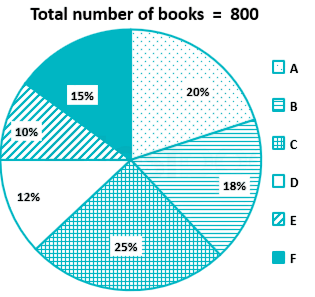
Question:
Find the total number of books of type D and F sold by the shopkeeper.
A. 220
B. 320
C. 360
D. 350
E. 216
Solution
Total number of books of type D sold by the shopkeeper = 800 × 12%
= 96
Total number of books of type F sold by the shopkeeper = 800 × 15% = 120
Total number of books of type D and F sold by the shopkeeper
= 96 + 120 = 216
38. Directions: Read the following chart carefully and answer the questions given below.
The following pie chart shows the number of books of 6 types (in percentage) sold by the shopkeeper.
Question:
Find the ratio between the total number of books of type A to the total number of books of type D sold by the shopkeeper.
A. 3 : 4
B. 5 : 6
C. 7 : 9
D. 5 : 3
E. 2 : 5
Solution
Number of books of type A sold by the shopkeeper = 20%
Number of books of type D sold by the shopkeeper = 12%∴ Required Ratio = 20 : 12 = 5 : 3
39. Directions: Read the following chart carefully and answer the questions given below.
The following pie chart shows the number of books of 6 types (in percentage) sold by the shopkeeper.
Question:
Number of books of type E sold by the shopkeeper is what percent of the number of books of type C sold by the shopkeeper?
A. 25%
B. 40%
C. 60%
D. 50%
E. 20%
Solution
Number of books of type E sold by the shopkeeper = 10%
Number of books of type C sold by the shopkeeper = 25%∴ Required Percentage = (10/25) × 100 = 40%
40. Directions: Read the following chart carefully and answer the questions given below.
The following pie chart shows the number of books of 6 types (in percentage) sold by the shopkeeper.
Question:
What is the difference between the total number of books of type A and C together to the total number of books of type E and F together?
A. 180
B. 120
C. 100
D. 160
E. 220
Solution
Percentage of books of type A sold by the shopkeeper = 20%
Percentage of books of type C sold by the shopkeeper = 25%
Total number of books of type A and C sold by the shopkeeper = (20 + 25)% of 800 = 360
Percentage of books of type E sold by the shopkeeper = 10%
Percentage of books of type F sold by the shopkeeper = 15%
Total number of books of type E and F sold by the shopkeeper = (10 + 15)% of 800 = 200∴ Required Difference = 360 – 200 = 160
41. Directions: Read the following chart carefully and answer the questions given below.
The following pie chart shows the number of books of 6 types (in percentage) sold by the shopkeeper.
Question:
Number of books of type B is how much percent more than the number of books of type D sold by the shopkeeper?
A. 25%
B. 50%
C. 20%
D. 120%
E. 75%
Solution
Percentage of books of type B sold by the shopkeeper = 18%
Percentage of books of type D sold by the shopkeeper = 12%∴ Required Percentage = [(18 – 12)/12] × 100 = 50%
42. A train crosses a platform in 24 seconds travelling with a speed of 60 km/hr. if the length of the train be 150 metres, then the length (in metres) of the platform is
A. 200 m
B. 180 m
C. 170 m
D. 210 m
E. 250 m
Solution
Total distance covered by train in 24 seconds with the speed of 60 km/hr.
Distance = 60 km/hr × 24 sec
= 60 × (5/18) × 24
= 400 metres.
Length of train + length of platform = 400 metres
150 + length of platform = 400∴ Length of platform = 250 m
43. The investment made by A and B are in the ratio 6 : 5. If 33.33% of total profit goes to charity and A gets Rs. 72,720 Rs as his share of profit then what is the amount of total profit.
A. Rs. 2,00,000
B. Rs. 1,99,980
C. Rs. 2,000
D. Rs. 20
E. None of these
Solution
Given that:
Investment of A and B = 6 : 5
A gets the profit = Rs. 72,720
Formula used
Profit = time × money
Investment ratio is equal to profit ratio
Calculation:
Let the total profit be 100 units
Remaining profit after donated = 100 – (33.33% of 100) =2/3 of total profit
Share of A’s profit = Rs. 72,720
⇒ 6x = 72720
⇒ x = 12120
⇒ 11x = 11 × 12120 = 133320
So, profit after donated = Rs. 133320
Total profit = 3/2 × 133320 = 199980
∴ The total profit is Rs. 1,99,980
44. In the given question, two equations numbered l and II are given. Solve both the equations and mark the appropriate answer.
I. x2 + 11x – 60 = 0II. y2 – 17y + 60 = 0
A. x > y
B. x < y
C. x ≥ y
D. x ≤ y
E. x = y or no relationship could be established
Solution
I. x2 + 11x – 60 = 0
⇒ x2 + 15x – 4x – 60 = 0
⇒ x(x + 15) – 4(x + 15) = 0
⇒ (x + 15)(x – 4) = 0
⇒ x = -15, 4
II. y2 – 17y + 60 = 0
⇒ y2 – 12y – 5y + 60 = 0
⇒ y(y – 12) – 5(y – 12) = 0
⇒ (y – 12)(y – 5) = 0
⇒ y = 12, 5
When x = -15, y = 12, then x < y
When x = -15, y = 5, then x < y
When x = 4, y = 12, then x < y
When x = 4, y = 5, then x < y∴ x and y are related as x < y
45. In the given question, two equations numbered l and II are given. Solve both the equations and mark the appropriate answer.
I. x2 – 5x + 6 = 0II. y2 + 5y – 6 = 0
A. x > y
B. x < y
C. x ≥ y
D. x ≤ y
E. x = y or no relationship could be established
Solution
I. x2 – 5x + 6 = 0
⇒ x2 – 3x – 2x + 6 = 0
⇒ x(x – 3) – 2(x – 3) = 0
⇒ (x – 3)(x – 2) = 0
⇒ x = 3, 2
II. y2 + 5y – 6 = 0
⇒ y2 + 6y – y – 6 = 0
⇒ y(y + 6) – 1(y + 6) = 0
⇒ (y + 6)(y – 1) = 0
⇒ y = – 6, 1
When x = 3, y = – 6, then x > y
When x = 3, y = 1, then x > y
When x = 2, y = – 6, then x > y
When x = 2, y = 1, then x > y∴ x and y are related as x > y
46. In the given question, two equations numbered l and II are given. Solve both the equations and mark the appropriate answer.
I. 8x2 – 9x + 1 = 0II. 4y2 – 9y + 2 = 0
A. x > y
B. x < y
C. x ≥ y
D. x ≤ y
E. x = y or no relationship could be established
Solution
I. 8x2 – 9x + 1 = 0
⇒ 8x2 – 8x – x + 1 = 0
⇒ 8x(x – 1) – 1(x – 1) = 0
⇒ (x – 1)(8x – 1) = 0
⇒ x = 1, 1/8
II. 4y2 – 9y + 2 = 0
⇒ 4y2 – 8y – y + 2 = 0
⇒ 4y(y – 2) – 1(y – 2) = 0
⇒ (y – 2)(4y – 1) = 0
⇒ y = 2, 1/4
When x = 1, y = 2, then x < y
When x = 1, y = 1/4, then x > y
When x = 1/8, y = 2, then x < y
When x = 1/8, y = 1/4, then x < y∴ No relationship could be established between x and y
47. In this question two equations numbered I and II are given. You have to solve both the equations and find out the correct option.
I. x2 – 3x – 28 = 0
II. y2 – y – 72 = 0
A. If x ≥ y
B. If x ≤ y
C. If x > y
D. If x < y
E. If relationship between x and y cannot be established or x = y.
Solution
I. x2 – 3x – 28 = 0
(x – 7) (x + 4) = 0
⇒ x = -4, 7
II. y2 – y – 72 = 0
(y + 8) (y – 9) = 0
⇒ y = -8, 9Hence, relationship cannot be established.
48. Directions: In this question two equations numbered I and II are given. You have to solve both the equations and find out the correct option.
I. 3x2 – 7x + 2 = 0
II. 2y2 – 7y + 3 = 0
A. If x ≥ y
B. If x ≤ y
C. If x > y
D. If x < y
E. If relationship between x and y cannot be established or x = y.
Solution
I. 3x2 – 7x + 2 = 0
(3x – 1) (x – 2) = 0
⇒ x = 1/3, 2
II. 2y2 – 7y + 3 = 0
(2y – 1) (y – 3) = 0
⇒ y = 3, 1/2Hence, relationship cannot be established.
49. In the following question, two statements are numbered as A and B. On solving these statements, we get quantities A and B respectively. Solve both quantities and choose the correct option.
Quantity A: There are 30 students in a class. Two monitors are to be selected. How many ways are there to select a monitor?
Quantity B: 450
A. Quantity A ≥ Quantity B
B. Quantity A ≤ Quantity B
C. Quantity A < Quantity B
D. Quantity A > Quantity B
E. Quantity A = Quantity B or No relation
Solution
Quantity A:
nCr = n !/ r ! (n – r) !
Calculation:
N = 30; r = 2
30C2 = 30!/ 2! × (30 – 2)!
= 30 × 29 × 28 !/ 2 × 1 × 28 !
= 435
∴ Total number of ways to select monitors is 435.
Quantity B: 450
∴ Quantity A < Quantity B
50. In the following question, two statements are numbered as A and B. On solving these statements, we get quantities A and B respectively. Solve both quantities and choose the correct option.
Quantity A: A boat travels 45 Km downstream and 35 km upstream in 5 hours each. Find the speed of stream.Quantity B: 2 km/hr
A. Quantity A ≥ Quantity B
B. Quantity A ≤ Quantity B
C. Quantity A < Quantity B
D. Quantity A > Quantity B
E. Quantity A = Quantity B or No relation
Solution
Quantity A:
Let the speed of boat be x km/hr
Speed of stream be y km/hr
According to the question,
45/(x + y) = 5
⇒ x + y = 9 —-(i)
35/(x – y) = 5
⇒ x – y = 7 —-(ii)
Solving equation (i) and (ii) we get,
x = 8 km/hr
y = 1 km/hr
∴ Speed of stream is 1 km/hr
Quantity B: 2 km/hr∴ Quantity A < Quantity B
51. Directions: Read the following information carefully and answer the questions based on it.
A faculty has 8000 students in the school and the ratio of boys to girls is 5 : 3. All the students are involved in five different games Cricket, Basketball, Hockey, Football, and Badminton. 15% of the boys and 20% of the girls are in Cricket and Basketball respectively. One-fourth of the boys are in the Hockey game. The number of girls in Cricket is 10% more than the number of boys in cricket. 20% of the total number of students are in Badminton. Girls in Hockey are 60% of the boys in the same game. 20% of the girls are in Football and the remaining girls are in Badminton. 28% of the boys are in Basketball and the remaining boys are in Football.
Question:
The number of boys in Cricket games is what percent of the number of girls in the game cricket and badminton together?
A. 71.42%
B. 76.66%
C. 88.56%
D. 46.66%
E. None of these
Solution
Total number of boys = 8000 × 5/8 = 5000
Total number of girls = 8000 × 3/8 = 3000
The total number of students in Badminton game = 8000 × 20 /100 = 1600
| Games | Boys | Girls |
| Cricket | 5000 × 15/100 = 750 | 750 × 110/100 = 825 |
| Basketball | 5000 × 28/100 = 1400 | 3000× 20/100 = 600 |
| Hockey | 5000 × 1/4 = 1250 | 1250 × 60/100 = 750 |
| Badminton | 1600 – 225 = 1375 | 3000 – 2775 = 225 |
| Football | 5000 – 4775 = 225 | 3000× 20/100 = 600 |
Calculation:
750 boys play cricket.
1050 girls play cricket and badminton together.
Then Required percentage = 750/1050 × 100
Required percentage = 71.42%
52. Directions: Read the following information carefully and answer the questions based on it.
A faculty has 8000 students in the school and the ratio of boys to girls is 5 : 3. All the students are involved in five different games Cricket, Basketball, Hockey, Football, and Badminton. 15% of the boys and 20% of the girls are in Cricket and Basketball respectively. One-fourth of the boys are in the Hockey game. The number of girls in Cricket is 10% more than the number of boys in cricket. 20% of the total number of students are in Badminton. Girls in Hockey are 60% of the boys in the same game. 20% of the girls are in Football and the remaining girls are in Badminton. 28% of the boys are in Basketball and the remaining boys are in Football.
Question:
What is the total number of boys in the Basketball and Football games together?
A. 1489
B. 1625
C. 1525
D. 1986
E. None of these
Solution
Total number of boys = 8000 × 5/8 = 5000
Total number of girls = 8000 × 3/8 = 3000
The total number of students in Badminton game = 8000 × 20 /100 = 1600
| Games | Boys | Girls |
| Cricket | 5000 × 15/100 = 750 | 750 × 110/100 = 825 |
| Basketball | 5000 × 28/100 = 1400 | 3000× 20/100 = 600 |
| Hockey | 5000 × 1/4 = 1250 | 1250 × 60/100 = 750 |
| Badminton | 1600 – 225 = 1375 | 3000 – 2775 = 225 |
| Football | 5000 – 4775 = 225 | 3000× 20/100 = 600 |
Calculation:
1400 boys plays Basketball
225 boys plays Football
The total boys in the basketball and football games together = 1400 + 225 = 1625
53. Directions: Read the following information carefully and answer the questions based on it.
A faculty has 8000 students in the school and the ratio of boys to girls is 5 : 3. All the students are involved in five different games Cricket, Basketball, Hockey, Football, and Badminton. 15% of the boys and 20% of the girls are in Cricket and Basketball respectively. One-fourth of the boys are in the Hockey game. The number of girls in Cricket is 10% more than the number of boys in cricket. 20% of the total number of students are in Badminton. Girls in Hockey are 60% of the boys in the same game. 20% of the girls are in Football and the remaining girls are in Badminton. 28% of the boys are in Basketball and the remaining boys are in Football.
Question:
The number of girls in the Hockey games what percent of the total number of students in the school?
A. 8.56%
B. 15.89%
C. 9.375%
D. 11.56%
E. None of these
Solution
Total number of boys = 8000 × 5/8 = 5000
Total number of girls = 8000 × 3/8 = 3000
The total number of students in Badminton game = 8000 × 20 /100 = 1600
| Games | Boys | Girls |
| Cricket | 5000 × 15/100 = 750 | 750 × 110/100 = 825 |
| Basketball | 5000 × 28/100 = 1400 | 3000× 20/100 = 600 |
| Hockey | 5000 × 1/4 = 1250 | 1250 × 60/100 = 750 |
| Badminton | 1600 – 225 = 1375 | 3000 – 2775 = 225 |
| Football | 5000 – 4775 = 225 | 3000× 20/100 = 600 |
Calculation:
750 girls play Hockey
Total students = 8000
Then required percentage = 750/8000 × 100
Required percentage = 9.375%
54. Directions: Read the following information carefully and answer the questions based on it.
A faculty has 8000 students in the school and the ratio of boys to girls is 5 : 3. All the students are involved in five different games Cricket, Basketball, Hockey, Football, and Badminton. 15% of the boys and 20% of the girls are in Cricket and Basketball respectively. One-fourth of the boys are in the Hockey game. The number of girls in Cricket is 10% more than the number of boys in cricket. 20% of the total number of students are in Badminton. Girls in Hockey are 60% of the boys in the same game. 20% of the girls are in Football and the remaining girls are in Badminton. 28% of the boys are in Basketball and the remaining boys are in Football.
Question:
What is the number of girls in the Badminton game?
A. 325
B. 225
C. 125
D. 250
E. None of these
Solution
Total number of boys = 8000 × 5/8 = 5000
Total number of girls = 8000 × 3/8 = 3000
The total number of students in Badminton game = 8000 × 20 /100 = 1600
| Games | Boys | Girls |
| Cricket | 5000 × 15/100 = 750 | 750 × 110/100 = 825 |
| Basketball | 5000 × 28/100 = 1400 | 3000× 20/100 = 600 |
| Hockey | 5000 × 1/4 = 1250 | 1250 × 60/100 = 750 |
| Badminton | 1600 – 225 = 1375 | 3000 – 2775 = 225 |
| Football | 5000 – 4775 = 225 | 3000× 20/100 = 600 |
Calculation:
From the table,
225 girls play Badminton.
Hence, girls in Badminton games = 225
55. Directions: Read the following information carefully and answer the questions based on it.
A faculty has 8000 students in the school and the ratio of boys to girls is 5 : 3. All the students are involved in five different games Cricket, Basketball, Hockey, Football, and Badminton. 15% of the boys and 20% of the girls are in Cricket and Basketball respectively. One-fourth of the boys are in the Hockey game. The number of girls in Cricket is 10% more than the number of boys in cricket. 20% of the total number of students are in Badminton. Girls in Hockey are 60% of the boys in the same game. 20% of the girls are in Football and the remaining girls are in Badminton. 28% of the boys are in Basketball and the remaining boys are in Football.
Question:
Which games has the maximum number of boys in the school?
A. Football
B. Cricket
C. Basketball
D. Hockey
E. Badminton
Solution
Total number of boys = 8000 × 5/8 = 5000
Total number of girls = 8000 × 3/8 = 3000
The total number of students in Badminton game = 8000 × 20 /100 = 1600
| Games | Boys | Girls |
| Cricket | 5000 × 15/100 = 750 | 750 × 110/100 = 825 |
| Basketball | 5000 × 28/100 = 1400 | 3000× 20/100 = 600 |
| Hockey | 5000 × 1/4 = 1250 | 1250 × 60/100 = 750 |
| Badminton | 1600 – 225 = 1375 | 3000 – 2775 = 225 |
| Football | 5000 – 4775 = 225 | 3000× 20/100 = 600 |
Calculation:
From the above table,
Basketball = 1400 boys
Hence, the maximum number of boys are in Basketball games.
56. 6 outlets working 3 hours a day can empty a filled cistern in 12 days. How much such outlets working 4 hours a day will empty the same cistern in 6 days?
A. 4
B. 5
C. 8
D. 9
E. 2
Solution
Given:
6 outlets working 3 hours a day can empty a filled cistern in 12 days
Calculation:
Let the required number of outlets be ‘x’
⇒ 6 × 3 × 12 = x × 4 × 6
⇒ (6 × 3 × 12) / (4 × 6) = x
⇒ 9 = x
∴ 9 such outlets are required.
57. If the ratio of apple juice and orange juice in a mix fruit juice is 2 : 3. If 2 liters of orange juice is further added to the mixture, the new ratio becomes 1 : 2. Calculate total quantity of new mixture.
A. 16 liters
B. 5 liters
C. 12 liters
D. 20 liters
E. None of the above
Solution
Given:
Old ratio of apple juice to orange juice = 2 : 3
New ratio = 1 : 2
Orange juice added = 2 liters
Calculations:
Here, assume X to be initial quantity of mixture
⇒ Quantity of apple juice in old mixture = (2 / 5) × X
⇒ Quantity of orange juice in old mixture = (3 / 5) × X
Now, 2 liters is added
⇒ ((2/5) × X)/(((3/5) × X) + 2) = 1 : 2
⇒ 2X/(3X + 10) = 1 : 2
⇒ 4X = 3X + 10
⇒ X = 10 liters
⇒ New mixture = 10 + 2∴ Quantity of new mixture is 12 liters
58. What approximate value should come in the place of question mark (?) in the following question?
29.98% of 249.98 ÷ 24.98 ÷ 2.98 = ?
A. 3
B. 5
C. 9
D. 11
E. 1
Solution
Follow BODMAS rule to solve this question, as per the order given below,
Step – 1: Parts of an equation enclosed in ‘Brackets’ must be solved first, and follow BODMAS rule in the bracket,
Step – 2: Any mathematical ‘Of’ or ‘Exponent’ must be solved next,
Step – 3: Next, the parts of the equation that contain ‘Division’ and ‘Multiplication’ are calculated,
Step – 4: Last but not least, the parts of the equation that contain ‘Addition’ and ‘Subtraction’ should be calculated.
Since, we need to find out the approximate value,
So, we can write these values to their nearest integers.
Given expression is
29.98% of 249.98 ÷ 24.98 ÷ 2.98 = ?
⇒ 30% of 250 ÷ 25 ÷ 3 = ?
⇒ 75 ÷ 25 ÷ 3 = ?
⇒ 3 ÷ 3 = ?
⇒ ? = 1
59. What approximate value should come in the place of question mark (?) in the following question?
?2 × 8.95 = 199.89 × 17.93
A. 16
B. 20
C. 10
D. 12
E. 15
Solution
Follow BODMAS rule to solve this question, as per the order given below,
Step – 1: Parts of an equation enclosed in ‘Brackets’ must be solved first, and follow BODMAS rule in the bracket,
Step – 2: Any mathematical ‘Of’ or ‘Exponent’ must be solved next,
Step – 3: Next, the parts of the equation that contain ‘Division’ and ‘Multiplication’ are calculated,
Step – 4: Last but not least, the parts of the equation that contain ‘Addition’ and ‘Subtraction’ should be calculated.
Since, we need to find out the approximate value,
So, we can write these values to their nearest integers.
Given expression is
?2 × 8.95 = 199.89 × 17.93
⇒ ?2 × 9 = 200 × 18
⇒ ?2 × 9 = 200 × 18
⇒ ?2 × 9 = 3600
⇒ ?2 = 3600/9
⇒ ?2 = 400
⇒ ? = 20
60. What approximate value should come in the place of question mark (?) in the following question?
7.98 × 3.94 + 2.98 × 35.98 ÷ 5.96 = ?
A. 40
B. 36
C. 50
D. 46
E. 56
Solution
Follow BODMAS rule to solve this question, as per the order given below,
Step – 1: Parts of an equation enclosed in ‘Brackets’ must be solved first, and follow BODMAS rule in the bracket,
Step – 2: Any mathematical ‘Of’ or ‘Exponent’ must be solved next,
Step – 3: Next, the parts of the equation that contain ‘Division’ and ‘Multiplication’ are calculated,
Step – 4: Last but not least, the parts of the equation that contain ‘Addition’ and ‘Subtraction’ should be calculated.
Since, we need to find out the approximate value,
So, we can write these values to their nearest integers.
Given expression is
7.98 × 3.94 + 2.98 × 35.98 ÷ 5.96 = ?
⇒ 8 × 4 + 3 × 36 ÷ 6 = ?
⇒ 8 × 4 + 3 × 6 = ?
⇒ 32 + 18 = ?
⇒ ? = 50
61. What approximate value should come in the place of question mark (?) in the following question?
12.952 + 19.97 × 5.94 –14.96 = ?
A. 262
B. 256
C. 302
D. 274
E. 198
Solution
Follow BODMAS rule to solve this question, as per the order given below,
Step – 1: Parts of an equation enclosed in ‘Brackets’ must be solved first, and follow BODMAS rule in the bracket,
Step – 2: Any mathematical ‘Of’ or ‘Exponent’ must be solved next,
Step – 3: Next, the parts of the equation that contain ‘Division’ and ‘Multiplication’ are calculated,
Step – 4: Last but not least, the parts of the equation that contain ‘Addition’ and ‘Subtraction’ should be calculated.
Since, we need to find out the approximate value,
So, we can write these values to their nearest integers.
Given expression is
12.952 + 19.97 × 5.94 –14.96 = ?
⇒ 132 + 20 × 6 – 15 = ?
⇒ 169 + 120 – 15 = ?
⇒ 289 – 15 = ?
⇒ ? = 274
62. What approximate value should come in the place of question mark (?) in the following question?
24.98% of 239.89 + 29.83% of 299.98 = ?
A. 120
B. 80
C. 170
D. 180
E. 150
Solution
Follow BODMAS rule to solve this question, as per the order given below,
Step – 1: Parts of an equation enclosed in ‘Brackets’ must be solved first, and follow BODMAS rule in the bracket,
Step – 2: Any mathematical ‘Of’ or ‘Exponent’ must be solved next,
Step – 3: Next, the parts of the equation that contain ‘Division’ and ‘Multiplication’ are calculated,
Step – 4: Last but not least, the parts of the equation that contain ‘Addition’ and ‘Subtraction’ should be calculated.
Since, we need to find out the approximate value,
So, we can write these values to their nearest integers.
Given expression is
24.98% of 239.89 + 29.83% of 299.98 = ?
⇒ 25% of 240 + 30% of 300 = ?
⇒ 240 × (25/100) + 300 × (30/100) = ?
⇒ 60 + 90 = ?
⇒ 150 = ?
63. Ram travels half of his journey by train at the speed of 120km/hr and rest of the half by car at 80km/hr . what is the average speed?
A. 96km/hr
B. 50km/hr
C. 100km/hr
D. 200km/hr
E. None of these
Solution
Given,
Ram travels half of his journey by train at the speed of 120km/hr
The rest of the half by car at 80km/hr
Formula Used
Average Speed: 2xy/x+y
Calculations:
Let the speed of train and car be x = 120, y = 80
average speed = 2 × 120 × 80/(120 + 80)
⇒ 96km/hr
∴ The required answer is 96km/hr
64. A shopkeeper bought an article at certain cost. He sold it at profit of 8%. If he sold at Rs.80 more then he would earn 12% of profit. Find the profit he earned.
A. Rs.220
B. Rs.180
C. Rs.210
D. Rs.130
E. Rs.160
Solution
Given:
Let cost price of an article be Rs.a.
⇒ selling price of an article = a × 108/100 = Rs.27a/25
⇒ new selling price of an article = a × 112/100 = 27a/25 + 80
⇒ 28a/25 = 27a/25 + 80
⇒ a = 2000
Cost price of an article = Rs.2000
Selling price of an article = 2000 × 27/25 = Rs.2160
∴ Profit he earned = 2160 – 2000 = Rs.160
65. The height of the cylinder is half of the radius of the cylinder, its volume is 539 cm3, then what is the total surface area of the cylinder?
A. 452 cm2
B. 462 cm2
C. 362 cm2
D. 400 cm2
E. 346 cm2
Solution
Given:
The height of the cylinder = half of the radius of the cylinder
The volume of the cylinder = 539 cm3
Formula Used:
The volume of the cylinder = πr2h
The total surface area of the cylinder = 2πr(r + h)
Where, r = Radius of the cylinder
h = Height of the cylinder,
π = 22/7
Calculation:
Let the radius of the cylinder(r) be x cm.
Then, the height of the cylinder(h) = (x/2) cm
According to the question,
πr2h = 539
⇒ (22/7) × x2 × (x/2) = 539
⇒ (11x3)/7 = 539
⇒ x3 = 539 × (7/11)
⇒ x3 = 49 × 7
⇒ x3 = 343
⇒ x = 7
Hence, r = 7 cm
h = (7/2) cm
The total surface area of the cylinder = 2πr(r + h)
⇒ 2 × (22/7) × 7 × {7 + (7/2)}
⇒ 44 × (21/2)
⇒ 22 × 21
⇒ 462 cm2
∴ The total surface area of the cylinder will be 462 cm2.
66. Directions: Read the information and answer the given questions.
Eight friends, namely, K, M, Q, Z, T, Y, R, and W, enter a grocery store one after another to purchase different products, but not necessarily in the same order.
Z enters before K. W enters after R but before Z. Only one person enters after K. Three friends enter between R and Y. R enters before Q. Three friends enter between Z and T. Four friends enter between W and M. Y enters after Q. Q enters the store immediately before Z. R is not the first person to enter.
Question:
Which of the following statements is definitely true?
A. W enters before T
B. M enters before Z
C. Q enters before T
D. Z enters before M
E. K is the first to enter
Solution
1. Only one person enters after K.
| Persons |
| K |
2. Z enters before K.
3. Three friends enter between Z and T.
Here, we have 5 Cases, i.e., Case 1, Case 2, Case 3, Case 4, and Case 5.
| Persons | ||||
| Case 1 | Case 2 | Case 3 | Case 4 | Case 5 |
| T | Z | |||
| T | Z | |||
| Z | ||||
| Z | T | |||
| Z | T | |||
| K | K | K | K | K |
| T | ||||
4. W enters after R but before Z.
5. Four friends enter between W and M.
6. Three friends enter between R and Y.
These conditions eliminate cases 3,4, and 5 from above and we get-
| Persons | |
| Case 1 | Case 2 |
| R | T |
| T | R |
| W | W |
| Y | Z |
| Z | Y |
| K | K |
| M | M |
7. R enters before Q.
8. Y enters after Q.
9. Q enters the store immediately before Z.
This eliminates case 1 from above and we get-
| Persons |
| Case 2 |
| T |
| R |
| W |
| Q |
| Z |
| Y |
| K |
| M |
This is our final arrangement,
| Persons |
| Case 2 |
| T |
| R |
| W |
| Q |
| Z |
| Y |
| K |
| M |
Hence, the correct answer is Z enters before M.
67. Directions: Read the information and answer the given questions.
Eight friends, namely, K, M, Q, Z, T, Y, R, and W, enter a grocery store one after another to purchase different products, but not necessarily in the same order.
Z enters before K. W enters after R but before Z. Only one person enters after K. Three friends enter between R and Y. R enters before Q. Three friends enter between Z and T. Four friends enter between W and M. Y enters after Q. Q enters the store immediately before Z. R is not the first person to enter.
Question:
Which of the following pairs have exactly two persons entering between them?
A. W and M
B. Q and Z
C. K and Y
D. R and Z
E. M and R
Solution
1. Only one person enters after K.
| Persons |
| K |
2. Z enters before K.
3. Three friends enter between Z and T.
Here, we have 5 Cases, i.e., Case 1, Case 2, Case 3, Case 4, and Case 5.
| Persons | ||||
| Case 1 | Case 2 | Case 3 | Case 4 | Case 5 |
| T | Z | |||
| T | Z | |||
| Z | ||||
| Z | T | |||
| Z | T | |||
| K | K | K | K | K |
| T | ||||
4. W enters after R but before Z.
5. Four friends enter between W and M.
6. Three friends enter between R and Y.
These conditions eliminate cases 3,4, and 5 from above and we get-
| Persons | |
| Case 1 | Case 2 |
| R | T |
| T | R |
| W | W |
| Y | Z |
| Z | Y |
| K | K |
| M | M |
7. R enters before Q.
8. Y enters after Q.
9. Q enters the store immediately before Z.
This eliminates case 1 from above and we get-
| Persons |
| Case 2 |
| T |
| R |
| W |
| Q |
| Z |
| Y |
| K |
| M |
This is our final arrangement,
| Persons |
| Case 2 |
| T |
| R |
| W |
| Q |
| Z |
| Y |
| K |
| M |
Hence, the correct answer is R and Z.
68. Directions: Read the information and answer the given questions.
Eight friends, namely, K, M, Q, Z, T, Y, R, and W, enter a grocery store one after another to purchase different products, but not necessarily in the same order.
Z enters before K. W enters after R but before Z. Only one person enters after K. Three friends enter between R and Y. R enters before Q. Three friends enter between Z and T. Four friends enter between W and M. Y enters after Q. Q enters the store immediately before Z. R is not the first person to enter.
Question:
Who among the following enters immediately after W?
A. R
B. T
C. Y
D. Q
E. M
Solution
1. Only one person enters after K.
| Persons |
| K |
2. Z enters before K.
3. Three friends enter between Z and T.
Here, we have 5 Cases, i.e., Case 1, Case 2, Case 3, Case 4, and Case 5.
| Persons | ||||
| Case 1 | Case 2 | Case 3 | Case 4 | Case 5 |
| T | Z | |||
| T | Z | |||
| Z | ||||
| Z | T | |||
| Z | T | |||
| K | K | K | K | K |
| T | ||||
4. W enters after R but before Z.
5. Four friends enter between W and M.
6. Three friends enter between R and Y.
These conditions eliminate cases 3,4, and 5 from above and we get-
| Persons | |
| Case 1 | Case 2 |
| R | T |
| T | R |
| W | W |
| Y | Z |
| Z | Y |
| K | K |
| M | M |
7. R enters before Q.
8. Y enters after Q.
9. Q enters the store immediately before Z.
This eliminates case 1 from above and we get-
| Persons |
| Case 2 |
| T |
| R |
| W |
| Q |
| Z |
| Y |
| K |
| M |
This is our final arrangement,
| Persons |
| Case 2 |
| T |
| R |
| W |
| Q |
| Z |
| Y |
| K |
| M |
Hence, the correct answer is Q.
69. Directions: Read the information and answer the given questions.
Eight friends, namely, K, M, Q, Z, T, Y, R, and W, enter a grocery store one after another to purchase different products, but not necessarily in the same order.
Z enters before K. W enters after R but before Z. Only one person enters after K. Three friends enter between R and Y. R enters before Q. Three friends enter between Z and T. Four friends enter between W and M. Y enters after Q. Q enters the store immediately before Z. R is not the first person to enter.
Question:
How many friends enter the store between W and M?
A. One
B. Two
C. Three
D. Four
E. None
Solution
1. Only one person enters after K.
| Persons |
| K |
2. Z enters before K.
3. Three friends enter between Z and T.
Here, we have 5 Cases, i.e., Case 1, Case 2, Case 3, Case 4, and Case 5.
| Persons | ||||
| Case 1 | Case 2 | Case 3 | Case 4 | Case 5 |
| T | Z | |||
| T | Z | |||
| Z | ||||
| Z | T | |||
| Z | T | |||
| K | K | K | K | K |
| T | ||||
4. W enters after R but before Z.
5. Four friends enter between W and M.
6. Three friends enter between R and Y.
These conditions eliminate cases 3,4, and 5 from above and we get-
| Persons | |
| Case 1 | Case 2 |
| R | T |
| T | R |
| W | W |
| Y | Z |
| Z | Y |
| K | K |
| M | M |
7. R enters before Q.
8. Y enters after Q.
9. Q enters the store immediately before Z.
This eliminates case 1 from above and we get-
| Persons |
| Case 2 |
| T |
| R |
| W |
| Q |
| Z |
| Y |
| K |
| M |
This is our final arrangement,
| Persons |
| Case 2 |
| T |
| R |
| W |
| Q |
| Z |
| Y |
| K |
| M |
Hence, the correct answer is Four.
70. Directions: Read the instructions carefully and answer the question below.
A, B, C, D, E, F, G, H, and I are the nine people of a family. I is the daughter-in-law of E who is the daughter of H. H is the only sister of D who is the only maternal uncle of C. G is the paternal grandfather of F. C is the maternal uncle of A who is the father of F. A person have either both parents or none of them.
Question:
How is C related to H?
A. Grandfather
B. Grandmother
C. Son
D. Daughter
E. Brother-in-law
Solution
According to the given information,
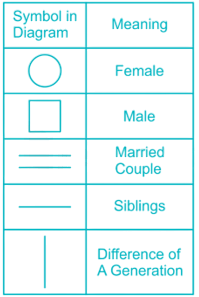
1) I is the daughter-in-law of E who is the daughter of H.
(Implies, I is the wife of the son of E who is the daughter of H.)
2) H is the only sister of D who is the only maternal uncle of C.
(Implies, D is the only brother of H and E is the sister of C.)
3) G is the paternal grandfather of F.
4) C is the maternal uncle of A who is the father of F.
(Implies, A must be the son of E and G is the husband of E.)
5) Either both or none of the parents of a person are alive.
(Also, as both the parents of a person are alive, implies, B must be the father of C.)
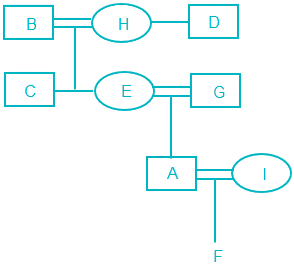
Clearly, C is the son of H.
71. Directions: Read the instructions carefully and answer the question below.
A, B, C, D, E, F, G, H, and I are nine members of a family. D is the only maternal uncle of F who is the son of H. A is the only daughter of B. H is the son-in-law of E who is the father of D. C is the brother of E. G is the sister of B. I is the brother of F. D has only 1 sibling.
Question:
How is G related to D?
A. Father
B. Mother
C. Maternal Aunt
D. Paternal Uncle
E. Can’t be determined
Solution
According to the given information,
1) D is the only maternal uncle of F who is the son of H.
(Implies, D is the only brother of F’s mother. H is either the mother or the father of F.)
2) H is the son-in-law of E who is the father of D.
(Implies, H is the father of F.)
3) A is the only daughter of B.
4) C is the brother of E.
5) D has only 1 sibling.
6) G is the sister of B.
(It is only possible if A is the sister of D. It further implies that B is the wife of E.)
7) I is the brother of F.
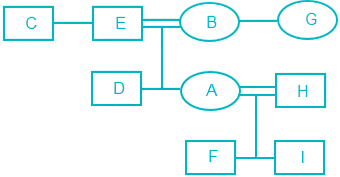
Clearly, G is the maternal aunt of D.
72. Directions: Read the instructions carefully and answer the question below.
A, B, C, D, E, F, G, H, I, and J are the ten members of a family. C is the paternal aunt of A who is the sister of F. J is the daughter-in-law of D who is married to C. F is the daughter of E. H is the brother of I, who is the daughter of C. B is the maternal Uncle of I. G is the daughter of H.
Question:
How is F related to H?
A. Cousin Sister
B. Niece
C. Maternal Aunt
D. Mother
E. Grandmother
Solution
According to the given information,
1) C is the paternal aunt of A who is the sister F.
(Implies, C is the sister of A’s father.)
2) F is the daughter of E.
(Implies, F is the sister of A.)
3) J is the daughter-in-law of D who is married to C.
(Implies, D must be the husband of C. Also, D has a son who is married to J.)
4) H is the brother of I, who is the daughter of C.
5) G is the daughter of H.
(Implies, H is the husband of J and G is the daughter of J.)
6) B is the maternal Uncle of I.
(Implies, B is the brother of C and it further implies that B must be the husband of E.)
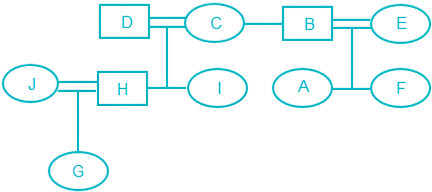
Clearly, F is the cousin sister of H.
73. Direction: In the question below, there are three statements followed by two conclusions numbered I and II. You have to take the given statements to be true even if they seem to be at variance with commonly known facts. Read all the conclusions and then decide which of the given conclusions logically follows from the given statements disregarding the commonly known facts.
Statements:
Some win are lose.
Some lose are toss.
Some toss are pitch.
Conclusions:
I. Some win are toss.II. Some lose are pitch.
A. Only conclusion I follows
B. Only conclusion II follows
C. Both I and II follow
D. Neither I nor II follows
E. Either I or II follows
Solution
The least possible Venn diagram for the given statements is as follows,

Conclusion:
I. Some win are toss → False (It is possible but not definite)
II. Some lose are pitch → False (It is possible but not definite)Hence, the correct answer is “neither conclusion I nor II follow”.
74. Direction: In the question below, there are three statements followed by two conclusions numbered I and II. You have to take the given statements to be true even if they seem to be at variance with commonly known facts. Read all the conclusions and then decide which of the given conclusions logically follows from the given statements disregarding the commonly known facts.
Statements:
Some book are shelf.
Each shelf is board.
No board is table.
Conclusions:
I. No shelf is table.II. Some board are book.
A. Only conclusion I follows
B. Only conclusion iI follows
C. Both I and II follow
D. Neither I nor II follows
E. Either I or II follows
Solution
The least possible Venn diagram for the given statements is as follows,
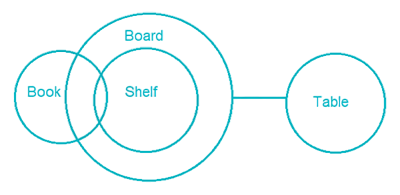
Conclusion:
I. No shelf is table → True (as all shelf are board and no board is table)
II. Some board are book → True (as all each shelf is board nd some shelf are book)Hence, both I and II follow.
75. In the question below are given three statements followed by three conclusions numbered I, II and III. You have to take the given statements to be true even if they seem to be at variance with commonly known facts. Read all the conclusions and then decide which of the given conclusions logically follows from the given statements disregarding commonly known facts.
Statements:
I. Only a few scorpio are snake
II. No reptile is snake
III. No scorpio is lizard
Conclusions:
I. Some lizard are not reptile
II. No snake is lizard
III. Some lizard are reptile
A. Only conclusion III follows
B. Only conclusion II follows
C. Both conclusion I and II follows
D. None follows
E. Both conclusion I and III follows
Solution
The least possible Venn diagram for the given statements is as follows,

I. Some lizard are not reptile → False (It can be possible but it is not definite)
II. No snake is lizard → False (It can be possible but it is not definite)
III. Some lizard are reptile → False (It can be possible but it is not definite)
None follows.
76. Direction: Read the following information carefully and answer the questions given below:
Seven persons Aryaman, Bhushan, Sohan, Rohan, Mohan, Bhavan, and Chaman are living on seven different floors in an eight-floor building but not necessarily in the same order. One of the floors in the building is vacant. The lowermost floor is numbered 1 and the topmost floor is numbered 8.
Mohan lives on floor number 6. Two people live between Bhushan and Bhavan in which Bhavan lives above Bhushan. Bhavan does not live on an even number floor. Sohan lives equidistant from Rohan and Aryaman. Rohan does not live below Mohan. Neither Aryaman nor Chaman lives immediately above or below Bhushan.
Question:
How many people live between Chaman and Mohan?
A. None
B. Two
C. Four
D. One
E. Three
Solution
Floors: 8 (One floor vacant)
Person: Aryaman, Bhushan, Sohan, Rohan, Mohan, Bhavan, and Chaman
1). Mohan lives on floor number 6.
2). Rohan does not live below Mohan.
3). Two people live between Bhushan and Bhavan in which Bhavan lives above Bhushan.
4). Bhavan does not live on an even number floor.
| Floors | Persons | ||
| Case I | Case II.I | Case II.II | |
| 8 | Rohan | Rohan | |
| 7 | Bhavan | Rohan | |
| 6 | Mohan | Mohan | Mohan |
| 5 | Bhavan | Bhavan | |
| 4 | Bhushan | ||
| 3 | |||
| 2 | Bhushan | Bhushan | |
| 1 | |||
5) Sohan lives equidistant from Rohan and Aryaman.
The number of floors between Rohan – Sohan and Sohan – Aryaman is the same.
6). Neither Aryaman nor Chaman lives immediately above or below Bhushan.
Case II.I eliminate here as Aryaman and Chaman will not live immediately above or below Bhushan
Case II.II eliminate here as statement 5 will not satisfy.
The final arrangement:
| Floors | person |
| 8 | Rohan |
| 7 | Bhavan |
| 6 | Mohan |
| 5 | Sohan |
| 4 | Bhushan |
| 3 | Vacant |
| 2 | Aryaman |
| 1 | Chaman |
Hence, Only three people live between Mohan and Chaman.
77. Direction: Read the following information carefully and answer the questions given below:
Seven persons Aryaman, Bhushan, Sohan, Rohan, Mohan, Bhavan, and Chaman are living on seven different floors in an eight-floor building but not necessarily in the same order. One of the floors in the building is vacant. The lowermost floor is numbered 1 and the topmost floor is numbered 8.
Mohan lives on floor number 6. Two people live between Bhushan and Bhavan in which Bhavan lives above Bhushan. Bhavan does not live on an even number floor. Sohan lives equidistant from Rohan and Aryaman. Rohan does not live below Mohan. Neither Aryaman nor Chaman lives immediately above or below Bhushan.
Question:
Who lives 2 floors away from Sohan?
A. Rohan
B. Bhavan
C. Aryaman
D. Chaman
E. Mohan
Solution
Floors: 8 (One floor vacant)
Person: Aryaman, Bhushan, Sohan, Rohan, Mohan, Bhavan, and Chaman
1). Mohan lives on floor number 6.
2). Rohan does not live below Mohan.
3). Two people live between Bhushan and Bhavan in which Bhavan lives above Bhushan.
4). Bhavan does not live on an even number floor.
| Floors | Persons | ||
| Case I | Case II.I | Case II.II | |
| 8 | Rohan | Rohan | |
| 7 | Bhavan | Rohan | |
| 6 | Mohan | Mohan | Mohan |
| 5 | Bhavan | Bhavan | |
| 4 | Bhushan | ||
| 3 | |||
| 2 | Bhushan | Bhushan | |
| 1 | |||
5) Sohan lives equidistant from Rohan and Aryaman.
The number of floors between Rohan – Sohan and Sohan – Aryaman is the same.
6). Neither Aryaman nor Chaman lives immediately above or below Bhushan.
Case II.I eliminate here as Aryaman and Chaman will not live immediately above or below Bhushan
Case II.II eliminate here as statement 5 will not satisfy.
The final arrangement:
| Floors | person |
| 8 | Rohan |
| 7 | Bhavan |
| 6 | Mohan |
| 5 | Sohan |
| 4 | Bhushan |
| 3 | Vacant |
| 2 | Aryaman |
| 1 | Chaman |
Hence, Bhavan lives 2 floors away from Sohan.
78. Direction: Read the following information carefully and answer the questions given below:
Seven persons Aryaman, Bhushan, Sohan, Rohan, Mohan, Bhavan, and Chaman are living on seven different floors in an eight-floor building but not necessarily in the same order. One of the floors in the building is vacant. The lowermost floor is numbered 1 and the topmost floor is numbered 8.
Mohan lives on floor number 6. Two people live between Bhushan and Bhavan in which Bhavan lives above Bhushan. Bhavan does not live on an even number floor. Sohan lives equidistant from Rohan and Aryaman. Rohan does not live below Mohan. Neither Aryaman nor Chaman lives immediately above or below Bhushan.
Question:
Which of the following combination is correct?
A. Bhavan – 5th Floor
B. Bhushan – 2nd Floor
C. Rohan – 7th Floor
D. Aryaman – 2nd Floor
E. Chaman – 4th Floor
Solution
Floors: 8 (One floor vacant)
Person: Aryaman, Bhushan, Sohan, Rohan, Mohan, Bhavan, and Chaman
1). Mohan lives on floor number 6.
2). Rohan does not live below Mohan.
3). Two people live between Bhushan and Bhavan in which Bhavan lives above Bhushan.
4). Bhavan does not live on an even number floor.
| Floors | Persons | ||
| Case I | Case II.I | Case II.II | |
| 8 | Rohan | Rohan | |
| 7 | Bhavan | Rohan | |
| 6 | Mohan | Mohan | Mohan |
| 5 | Bhavan | Bhavan | |
| 4 | Bhushan | ||
| 3 | |||
| 2 | Bhushan | Bhushan | |
| 1 | |||
5) Sohan lives equidistant from Rohan and Aryaman.
The number of floors between Rohan – Sohan and Sohan – Aryaman is the same.
6). Neither Aryaman nor Chaman lives immediately above or below Bhushan.
Case II.I eliminate here as Aryaman and Chaman will not live immediately above or below Bhushan
Case II.II eliminate here as statement 5 will not satisfy.
The final arrangement:
| Floors | person |
| 8 | Rohan |
| 7 | Bhavan |
| 6 | Mohan |
| 5 | Sohan |
| 4 | Bhushan |
| 3 | Vacant |
| 2 | Aryaman |
| 1 | Chaman |
Hence, Aryaman lives on the 2nd Floor.
79. Direction: Read the following information carefully and answer the questions given below:
Seven persons Aryaman, Bhushan, Sohan, Rohan, Mohan, Bhavan, and Chaman are living on seven different floors in an eight-floor building but not necessarily in the same order. One of the floors in the building is vacant. The lowermost floor is numbered 1 and the topmost floor is numbered 8.
Mohan lives on floor number 6. Two people live between Bhushan and Bhavan in which Bhavan lives above Bhushan. Bhavan does not live on an even number floor. Sohan lives equidistant from Rohan and Aryaman. Rohan does not live below Mohan. Neither Aryaman nor Chaman lives immediately above or below Bhushan.
Question:
Which of the following statement is not true?
A. Chaman does not live on floor number 1.
B. Bhavan lives immediately above Mohan.
C. Two floors are between Rohan and Sohan.
D. Bhushan lives immediately above vacant floor.
E. None of these is true
Solution
Floors: 8 (One floor vacant)
Person: Aryaman, Bhushan, Sohan, Rohan, Mohan, Bhavan, and Chaman
1). Mohan lives on floor number 6.
2). Rohan does not live below Mohan.
3). Two people live between Bhushan and Bhavan in which Bhavan lives above Bhushan.
4). Bhavan does not live on an even number floor.
| Floors | Persons | ||
| Case I | Case II.I | Case II.II | |
| 8 | Rohan | Rohan | |
| 7 | Bhavan | Rohan | |
| 6 | Mohan | Mohan | Mohan |
| 5 | Bhavan | Bhavan | |
| 4 | Bhushan | ||
| 3 | |||
| 2 | Bhushan | Bhushan | |
| 1 | |||
5) Sohan lives equidistant from Rohan and Aryaman.
The number of floors between Rohan – Sohan and Sohan – Aryaman is the same.
6). Neither Aryaman nor Chaman lives immediately above or below Bhushan.
Case II.I eliminate here as Aryaman and Chaman will not live immediately above or below Bhushan
Case II.II eliminate here as statement 5 will not satisfy.
The final arrangement:
| Floors | person |
| 8 | Rohan |
| 7 | Bhavan |
| 6 | Mohan |
| 5 | Sohan |
| 4 | Bhushan |
| 3 | Vacant |
| 2 | Aryaman |
| 1 | Chaman |
Hence, Chaman does not live on floor number 1 is not true.
80. Direction: Read the following information carefully and answer the questions given below:
Seven persons Aryaman, Bhushan, Sohan, Rohan, Mohan, Bhavan, and Chaman are living on seven different floors in an eight-floor building but not necessarily in the same order. One of the floors in the building is vacant. The lowermost floor is numbered 1 and the topmost floor is numbered 8.
Mohan lives on floor number 6. Two people live between Bhushan and Bhavan in which Bhavan lives above Bhushan. Bhavan does not live on an even number floor. Sohan lives equidistant from Rohan and Aryaman. Rohan does not live below Mohan. Neither Aryaman nor Chaman lives immediately above or below Bhushan.
Question:
Which floor is vacant?
A. Floor 8
B. Floor 5
C. Floor 3
D. Floor 2
E. Floor 1
Solution
Floors: 8 (One floor vacant)
Person: Aryaman, Bhushan, Sohan, Rohan, Mohan, Bhavan, and Chaman
1). Mohan lives on floor number 6.
2). Rohan does not live below Mohan.
3). Two people live between Bhushan and Bhavan in which Bhavan lives above Bhushan.
4). Bhavan does not live on an even number floor.
| Floors | Persons | ||
| Case I | Case II.I | Case II.II | |
| 8 | Rohan | Rohan | |
| 7 | Bhavan | Rohan | |
| 6 | Mohan | Mohan | Mohan |
| 5 | Bhavan | Bhavan | |
| 4 | Bhushan | ||
| 3 | |||
| 2 | Bhushan | Bhushan | |
| 1 | |||
5) Sohan lives equidistant from Rohan and Aryaman.
The number of floors between Rohan – Sohan and Sohan – Aryaman is the same.
6). Neither Aryaman nor Chaman lives immediately above or below Bhushan.
Case II.I eliminate here as Aryaman and Chaman will not live immediately above or below Bhushan
Case II.II eliminate here as statement 5 will not satisfy.
The final arrangement:
| Floors | person |
| 8 | Rohan |
| 7 | Bhavan |
| 6 | Mohan |
| 5 | Sohan |
| 4 | Bhushan |
| 3 | Vacant |
| 2 | Aryaman |
| 1 | Chaman |
Hence, Floor 3 is vacant.
81. Direction: Study the following information carefully and answer the given questions.
In a certain code language
‘uv lu nop’ means ‘decision is big’,
‘za te nop twl’ means ‘hadoop is efficient technology’,
‘twl ki lu fq’ means ‘hadoop process big data’,
‘ki tw te yt’ means ‘data makes efficient conclusions’.
Question:
Code ‘za’ is for which word in the given language?
A. data
B. big
C. makes
D. efficient
E. technology
Solution
According to the given information:
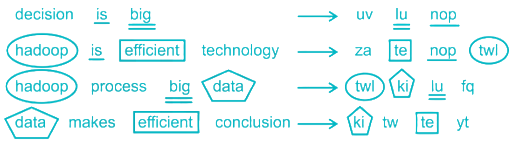
Hence ‘Za’ is code for ‘technology’.
82. Direction: Study the following information carefully and answer the given questions.
In a certain code language
‘uv lu nop’ means ‘decision is big’,
‘za te nop twl’ means ‘hadoop is efficient technology’,
‘twl ki lu fq’ means ‘hadoop process big data’,
‘ki tw te yt’ means ‘data makes efficient conclusions’.
Question:
What would be the code for ‘big data decision is efficient’?
A. twl ki uv te nop
B. fq ki uv tw yt
C. lu ki uv tw yt
D. lu ki uv nop te
E. None of these
Solution
According to the given information:
Code for ‘big’ is ‘lu’,
Code for ‘data’ is ‘ki’,
Code for ‘decision’ is ‘uv’,
Code for ‘is’ is ‘nop’,
Code for ‘efficient’ is ‘te’,
Hence, the only possible answer is ‘lu ki uv nop te’.
83. Direction: Study the following information carefully and answer the given questions.
In a certain code language
‘uv lu nop’ means ‘decision is big’,
‘za te nop twl’ means ‘hadoop is efficient technology’,
‘twl ki lu fq’ means ‘hadoop process big data’,
‘ki tw te yt’ means ‘data makes efficient conclusions’.
Question:
In a certain language ‘hadoop technology makes big data process outstanding’ is coded as ‘twl tw za ki sg lu fq’, then what would be the code for ‘outstanding’?
A. za
B. uv
C. sg
D. tw
E. lu
Solution
According to the given information:
Code for ‘hadoop technology makes’ is ‘twl Za tw’,
Code for ‘big data process’ for’ is ‘lukifq’,
Hence, the possible code for ‘outstanding’ is ‘sg’.
84. Direction: Study the following information carefully and answer the given questions.
In a certain code language
‘uv lu nop’ means ‘decision is big’,
‘za te nop twl’ means ‘hadoop is efficient technology’,
‘twl ki lu fq’ means ‘hadoop process big data’,
‘ki tw te yt’ means ‘data makes efficient conclusions’.
Question:
Which of the two statements is required to decode “life makes better conclusions” , if ‘life better’ is coded as ‘na ka’.
I: ‘uv lu nop’ means ‘decision is big’,
II: ‘za te nop twl’ means ‘hadoop is efficient technology’,
III: ‘twl ki lu fq’ means ‘hadoop process big data’, ‘IV: ‘ki tw te yt’ means ‘data makes efficient conclusions’.
A. Only I
B. Only II
C. Both I and IV
D. Either I and IV
E. None of these
Solution
According to the given information:
We need I, II and III statements to decode “decision” and statements II, III and IV to decode “makes conclusion”. But the exact code of “Makes” can not be determined.
Hence, the correct answer is none of these.
85. Directions: Read the information and answer the given questions.
Seven individuals, namely, A, B, C, D, E, F, and G, each go to work on a different day of the week, starting from Monday and ending on Sunday. No two people work on the same day.
There are exactly two people who work between person G and person B. Person C works on a day after person E but before person G. Only two people work after person A. Person B goes to work later in the week than person G. There are exactly two people between person D and person F. Person F works on a day after person A. There are exactly four people between person C and person B.
Question:
How many people work between person A and person E?
A. None
B. One
C. Two
D. Three
E. Can’t be determined
Solution
1. Only two people work after person A.
2. Person F works on a day after person A.
Here, we have 2 Cases, i.e., Case 1 and Case 2.
| Days | Persons | |
| Case 1 | Case 2 | |
| Monday | ||
| Tuesday | ||
| Wednesday | ||
| Thursday | ||
| Friday | A | A |
| Saturday | F | |
| Sunday | F | |
3. There are exactly two people between person D and person F.
| Days | Persons | |
| Case 1 | Case 2 | |
| Monday | ||
| Tuesday | ||
| Wednesday | D | |
| Thursday | D | |
| Friday | A | A |
| Saturday | F | |
| Sunday | F | |
4. There are exactly four people between person C and person B.
| Days | Persons | |
| Case 1 | Case 2 | |
| Monday | C/B | |
| Tuesday | C/B | |
| Wednesday | D | |
| Thursday | D | |
| Friday | A | A |
| Saturday | F | B/C |
| Sunday | B/C | F |
5. There are exactly two people who work between person G and person B.
6. Person B goes to work later in the week than person G.
| Days | Persons | |
| Case 1 | Case 2 | |
| Monday | C | |
| Tuesday | C | |
| Wednesday | D | G |
| Thursday | G | D |
| Friday | A | A |
| Saturday | F | B |
| Sunday | B | F |
7. Person C works on a day after person E but before person G.
Now, we can eliminate Case 2. (Because C works on the day before E).
This is our final arrangement,
| Days | Persons |
| Case 1 | |
| Monday | E |
| Tuesday | C |
| Wednesday | D |
| Thursday | G |
| Friday | A |
| Saturday | F |
| Sunday | B |
Hence, the correct answer is Three.
86. Directions: Read the information and answer the given questions.
Seven individuals, namely, A, B, C, D, E, F, and G, each go to work on a different day of the week, starting from Monday and ending on Sunday. No two people work on the same day.
There are exactly two people who work between person G and person B. Person C works on a day after person E but before person G. Only two people work after person A. Person B goes to work later in the week than person G. There are exactly two people between person D and person F. Person F works on a day after person A. There are exactly four people between person C and person B.
Question:
Who among the following goes to work on Sunday?
A. Person B
B. Person F
C. Person D
D. Person C
E. Person A
Solution
1. Only two people work after person A.
2. Person F works on a day after person A.
Here, we have 2 Cases, i.e., Case 1 and Case 2.
| Days | Persons | |
| Case 1 | Case 2 | |
| Monday | ||
| Tuesday | ||
| Wednesday | ||
| Thursday | ||
| Friday | A | A |
| Saturday | F | |
| Sunday | F | |
3. There are exactly two people between person D and person F.
| Days | Persons | |
| Case 1 | Case 2 | |
| Monday | ||
| Tuesday | ||
| Wednesday | D | |
| Thursday | D | |
| Friday | A | A |
| Saturday | F | |
| Sunday | F | |
4. There are exactly four people between person C and person B.
| Days | Persons | |
| Case 1 | Case 2 | |
| Monday | C/B | |
| Tuesday | C/B | |
| Wednesday | D | |
| Thursday | D | |
| Friday | A | A |
| Saturday | F | B/C |
| Sunday | B/C | F |
5. There are exactly two people who work between person G and person B.
6. Person B goes to work later in the week than person G.
| Days | Persons | |
| Case 1 | Case 2 | |
| Monday | C | |
| Tuesday | C | |
| Wednesday | D | G |
| Thursday | G | D |
| Friday | A | A |
| Saturday | F | B |
| Sunday | B | F |
7. Person C works on a day after person E but before person G.
Now, we can eliminate Case 2. (Because C works on the day before E).
This is our final arrangement,
| Days | Persons |
| Case 1 | |
| Monday | E |
| Tuesday | C |
| Wednesday | D |
| Thursday | G |
| Friday | A |
| Saturday | F |
| Sunday | B |
Hence, the correct answer is Person B.
87. Directions: Read the information and answer the given questions.
Seven individuals, namely, A, B, C, D, E, F, and G, each go to work on a different day of the week, starting from Monday and ending on Sunday. No two people work on the same day.
There are exactly two people who work between person G and person B. Person C works on a day after person E but before person G. Only two people work after person A. Person B goes to work later in the week than person G. There are exactly two people between person D and person F. Person F works on a day after person A. There are exactly four people between person C and person B.
Question:
On which day does person E go to work?
A. Monday
B. Wednesday
C. Thursday
D. Saturday
E. Sunday
Solution
1. Only two people work after person A.
2. Person F works on a day after person A.
Here, we have 2 Cases, i.e., Case 1 and Case 2.
| Days | Persons | |
| Case 1 | Case 2 | |
| Monday | ||
| Tuesday | ||
| Wednesday | ||
| Thursday | ||
| Friday | A | A |
| Saturday | F | |
| Sunday | F | |
3. There are exactly two people between person D and person F.
| Days | Persons | |
| Case 1 | Case 2 | |
| Monday | ||
| Tuesday | ||
| Wednesday | D | |
| Thursday | D | |
| Friday | A | A |
| Saturday | F | |
| Sunday | F | |
4. There are exactly four people between person C and person B.
| Days | Persons | |
| Case 1 | Case 2 | |
| Monday | C/B | |
| Tuesday | C/B | |
| Wednesday | D | |
| Thursday | D | |
| Friday | A | A |
| Saturday | F | B/C |
| Sunday | B/C | F |
5. There are exactly two people who work between person G and person B.
6. Person B goes to work later in the week than person G.
| Days | Persons | |
| Case 1 | Case 2 | |
| Monday | C | |
| Tuesday | C | |
| Wednesday | D | G |
| Thursday | G | D |
| Friday | A | A |
| Saturday | F | B |
| Sunday | B | F |
7. Person C works on a day after person E but before person G.
Now, we can eliminate Case 2. (Because C works on the day before E).
This is our final arrangement,
| Days | Persons |
| Case 1 | |
| Monday | E |
| Tuesday | C |
| Wednesday | D |
| Thursday | G |
| Friday | A |
| Saturday | F |
| Sunday | B |
Hence, the correct answer is Monday.
88. Directions: Read the information and answer the given questions.
Seven individuals, namely, A, B, C, D, E, F, and G, each go to work on a different day of the week, starting from Monday and ending on Sunday. No two people work on the same day.
There are exactly two people who work between person G and person B. Person C works on a day after person E but before person G. Only two people work after person A. Person B goes to work later in the week than person G. There are exactly two people between person D and person F. Person F works on a day after person A. There are exactly four people between person C and person B.
Question:
Which one is odd?
A. D and F
B. G and B
C. A and F
D. C and A
E. E and G
Solution
1. Only two people work after person A.
2. Person F works on a day after person A.
Here, we have 2 Cases, i.e., Case 1 and Case 2.
| Days | Persons | |
| Case 1 | Case 2 | |
| Monday | ||
| Tuesday | ||
| Wednesday | ||
| Thursday | ||
| Friday | A | A |
| Saturday | F | |
| Sunday | F | |
3. There are exactly two people between person D and person F.
| Days | Persons | |
| Case 1 | Case 2 | |
| Monday | ||
| Tuesday | ||
| Wednesday | D | |
| Thursday | D | |
| Friday | A | A |
| Saturday | F | |
| Sunday | F | |
4. There are exactly four people between person C and person B.
| Days | Persons | |
| Case 1 | Case 2 | |
| Monday | C/B | |
| Tuesday | C/B | |
| Wednesday | D | |
| Thursday | D | |
| Friday | A | A |
| Saturday | F | B/C |
| Sunday | B/C | F |
5. There are exactly two people who work between person G and person B.
6. Person B goes to work later in the week than person G.
| Days | Persons | |
| Case 1 | Case 2 | |
| Monday | C | |
| Tuesday | C | |
| Wednesday | D | G |
| Thursday | G | D |
| Friday | A | A |
| Saturday | F | B |
| Sunday | B | F |
7. Person C works on a day after person E but before person G.
Now, we can eliminate Case 2. (Because C works on the day before E).
This is our final arrangement,
| Days | Persons |
| Case 1 | |
| Monday | E |
| Tuesday | C |
| Wednesday | D |
| Thursday | G |
| Friday | A |
| Saturday | F |
| Sunday | B |
Except for A and F, in all other pairs, two people work between the pairs.
Hence, the correct answer is A and F.
89. Directions: Read the information and answer the given questions.
Seven individuals, namely, A, B, C, D, E, F, and G, each go to work on a different day of the week, starting from Monday and ending on Sunday. No two people work on the same day.
There are exactly two people who work between person G and person B. Person C works on a day after person E but before person G. Only two people work after person A. Person B goes to work later in the week than person G. There are exactly two people between person D and person F. Person F works on a day after person A. There are exactly four people between person C and person B.
Question:
Which of the following statements is definitely true?
A. Person B works before person F.
B. Only one person works after person G.
C. Person D works before person B.
D. Person C works after person A.
E. Person G works after person F.
Solution
1. Only two people work after person A.
2. Person F works on a day after person A.
Here, we have 2 Cases, i.e., Case 1 and Case 2.
| Days | Persons | |
| Case 1 | Case 2 | |
| Monday | ||
| Tuesday | ||
| Wednesday | ||
| Thursday | ||
| Friday | A | A |
| Saturday | F | |
| Sunday | F | |
3. There are exactly two people between person D and person F.
| Days | Persons | |
| Case 1 | Case 2 | |
| Monday | ||
| Tuesday | ||
| Wednesday | D | |
| Thursday | D | |
| Friday | A | A |
| Saturday | F | |
| Sunday | F | |
4. There are exactly four people between person C and person B.
| Days | Persons | |
| Case 1 | Case 2 | |
| Monday | C/B | |
| Tuesday | C/B | |
| Wednesday | D | |
| Thursday | D | |
| Friday | A | A |
| Saturday | F | B/C |
| Sunday | B/C | F |
5. There are exactly two people who work between person G and person B.
6. Person B goes to work later in the week than person G.
| Days | Persons | |
| Case 1 | Case 2 | |
| Monday | C | |
| Tuesday | C | |
| Wednesday | D | G |
| Thursday | G | D |
| Friday | A | A |
| Saturday | F | B |
| Sunday | B | F |
7. Person C works on a day after person E but before person G.
Now, we can eliminate Case 2. (Because C works on the day before E).
This is our final arrangement,
| Days | Persons |
| Case 1 | |
| Monday | E |
| Tuesday | C |
| Wednesday | D |
| Thursday | G |
| Friday | A |
| Saturday | F |
| Sunday | B |
Hence, the correct answer is Person D works before person B.
90. Directions: The following questions are based on the five three-digit numbers given below.417 258 846 715 195
Question:
If the subtraction of the first and second digit of the highest number is added to the subtraction of the first and second digit of the third-lowest number, then what will be the final answer?
A. 3
B. 1
C. 5
D. 7
E. 4
Solution
Given series- 417 258 846 715 195
Subtraction of first and second digit of the highest number: 8 – 4 = 4
Subtraction of first and second digit of the third-lowest number: 4 – 1 = 3
So, addition of both numbers is: 4 + 3 = 7.Hence, the answer is 7.
91. Directions: The following questions are based on the five three-digit numbers given below.417 258 846 715 195
Question:
If 1 is added to the third digit of each number, and then the position of the first and the second digit are interchanged, which of the following will be the second-highest number?
A. 417
B. 258
C. 846
D. 715
E. 195
Solution
Given series- 417 258 846 715 195
Adding 1 to the third digit: 418 259 847 716 196
Interchanging first and second digit: 148 529 487 176 916
So, 529 is the second-highest number which comes from 258.Hence, the answer is 258.
92. Directions: The following questions are based on the five three-digit numbers given below.417 258 846 715 195
Question:
If 3 are subtracted from the third digit of each number, and then the position of the first and the third digit are interchanged, which of the following will be the third-lowest number?
A. 258
B. 715
C. 195
D. 417
E. 846
Solution
Given series- 417 258 846 715 195
Subtracting 3 from the third digit: 414 255 843 712 192
Interchanging first and third digit: 414 552 348 217 291
So, 348 is the third-lowest number which comes from 846.Hence, the answer is 846.
93. Directions: The following questions are based on the five three-digit numbers given below.417 258 846 715 195
Question:
If the second digit of the lowest number is multiplied by the third digit of the second-highest number, then what will be the final answer?
A. 45
B. 25
C. 9
D. 63
E. 35
Solution
Given series- 417 258 846 715 195
The second digit of the lowest number: 9
The third digit of the second-highest number: 5
So, the second digit of the lowest number (9) is multiplied by the third digit of the second-highest number (5) then the answer is 45.Hence, the answer is 45.
94. Directions: The following questions are based on the five three-digit numbers given below.417 258 846 715 195
Question:
If these numbers are written with their digits in the decreasing order, which number among them will become second-lowest?
A. 258
B. 195
C. 715
D. 846
E. 417
Solution
Given series- 417 258 846 715 195
Decreasing order within digit – 741 852 864 751 951
So, 751 is the second-lowest number which comes from 715.Hence, the answer is 715.
95. In the number 79153648, replace each digit as follows: If the digit is a prime number, replace it with 0. If it is even, replace it with its half. If it is odd and not prime, replace it with the next digit. What is the sum of all the individual digits in the final result?
A. 12
B. 17
C. 18
D. 21
E. 24
Solution
Given number: 79153648
Replace 0 – Prime; ÷2 – Even; +1 – Odd (Not Prime)
According to the condition, if the digit is a prime number, replace it with 0. If it is even, replace it with its half. If it is odd and not prime, replace it with the next digit.
| Digits | 7 | 9 | 1 | 5 | 3 | 6 | 4 | 8 |
| 0 – Prime; ÷2 – Even; +1 – Odd (Not Prime) | 0 | +1 | +1 | 0 | 0 | ÷2 | ÷2 | ÷2 |
| Resultant | 0 | 10 | 2 | 0 | 0 | 3 | 2 | 4 |
Final String = 010200324.
Sum in the final result = 0 + 1 + 0 + 2 + 0 + 0 + 3 + 2 + 4 = 12;
Hence, 12 is the sum of the digits in the final result.
96. Direction: Eight persons – P, Q, R, S, T, U, V and W are sitting in a row facing north, but not necessarily in the same order. Number of persons are sitting between T and S is the same as the number of persons sitting between Q and R. P and T are sitting at the ends. S is sitting to the immediate left of V, who is to the right of T and to the left of W, who is to the immediate right of U. No person is sitting between V and Q.
Question:
How many persons are sitting to the right of R?
A. One
B. Two
C. Three
D. Four
E. Five
Solution
1) P and T are sitting at the ends. V is to the right of T. Hence, T should be at the left end. The arrangements is as follows.
1) P and T are sitting at the ends. V is to the right of T. Hence, T should be at the left end. The arrangements is as follows.

2) Number of persons are sitting between T and S is the same as the number of persons sitting between Q and R.
3) S is sitting to the immediate left of V, who is to the right of T and to the left of W, who is to the immediate right of U. The possible arrangements will be as follows.
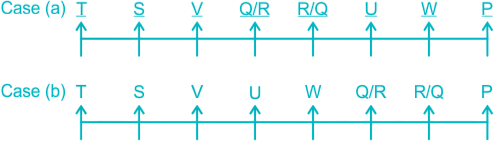
4) No person is sitting between V and Q. Hence case (b) is not possible.

Hence, three persons are sitting to the right of R.
97. Direction: Eight persons – P, Q, R, S, T, U, V and W are sitting in a row facing north, but not necessarily in the same order. Number of persons are sitting between T and S is the same as the number of persons sitting between Q and R. P and T are sitting at the ends. S is sitting to the immediate left of V, who is to the right of T and to the left of W, who is to the immediate right of U. No person is sitting between V and Q.
Question:
Who is sitting second to the left of W?
A. U
B. W
C. P
D. V
E. None of these
Solution
1) P and T are sitting at the ends. V is to the right of T. Hence, T should be at the left end. The arrangements is as follows.
1) P and T are sitting at the ends. V is to the right of T. Hence, T should be at the left end. The arrangements is as follows.
2) Number of persons are sitting between T and S is the same as the number of persons sitting between Q and R.
3) S is sitting to the immediate left of V, who is to the right of T and to the left of W, who is to the immediate right of U. The possible arrangements will be as follows.
4) No person is sitting between V and Q. Hence case (b) is not possible.
Hence, R is sitting second to the left of W.
98. Direction: Eight persons – P, Q, R, S, T, U, V and W are sitting in a row facing north, but not necessarily in the same order. Number of persons are sitting between T and S is the same as the number of persons sitting between Q and R. P and T are sitting at the ends. S is sitting to the immediate left of V, who is to the right of T and to the left of W, who is to the immediate right of U. No person is sitting between V and Q.
Question:
Who is sitting at the extreme right end?
A. T
B. V
C. Q
D. P
E. S
Solution
1) P and T are sitting at the ends. V is to the right of T. Hence, T should be at the left end. The arrangements is as follows.
1) P and T are sitting at the ends. V is to the right of T. Hence, T should be at the left end. The arrangements is as follows.
2) Number of persons are sitting between T and S is the same as the number of persons sitting between Q and R.
3) S is sitting to the immediate left of V, who is to the right of T and to the left of W, who is to the immediate right of U. The possible arrangements will be as follows.
4) No person is sitting between V and Q. Hence case (b) is not possible.
Hence, P is sitting at the extreme right end.
99. Direction: Eight persons – P, Q, R, S, T, U, V and W are sitting in a row facing north, but not necessarily in the same order. Number of persons are sitting between T and S is the same as the number of persons sitting between Q and R. P and T are sitting at the ends. S is sitting to the immediate left of V, who is to the right of T and to the left of W, who is to the immediate right of U. No person is sitting between V and Q.
Question:
Who is sitting exactly in between S and P?
A. V
B. R
C. Q
D. W
E. None of these
Solution
1) P and T are sitting at the ends. V is to the right of T. Hence, T should be at the left end. The arrangements is as follows.
1) P and T are sitting at the ends. V is to the right of T. Hence, T should be at the left end. The arrangements is as follows.
2) Number of persons are sitting between T and S is the same as the number of persons sitting between Q and R.
3) S is sitting to the immediate left of V, who is to the right of T and to the left of W, who is to the immediate right of U. The possible arrangements will be as follows.
4) No person is sitting between V and Q. Hence case (b) is not possible.
Hence, R is sitting exactly between S and P.
100. Direction: Eight persons – P, Q, R, S, T, U, V and W are sitting in a row facing north, but not necessarily in the same order. Number of persons are sitting between T and S is the same as the number of persons sitting between Q and R. P and T are sitting at the ends. S is sitting to the immediate left of V, who is to the right of T and to the left of W, who is to the immediate right of U. No person is sitting between V and Q.
Question:
Who is sitting second to the left of P?
A. S
B. Q
C. V
D. W
E. U
Solution
1) P and T are sitting at the ends. V is to the right of T. Hence, T should be at the left end. The arrangements is as follows.
2) Number of persons are sitting between T and S is the same as the number of persons sitting between Q and R.
3) S is sitting to the immediate left of V, who is to the right of T and to the left of W, who is to the immediate right of U. The possible arrangements will be as follows.
4) No person is sitting between V and Q. Hence case (b) is not possible.
Hence, U is sitting second to the left of P